health

15 women showed us what skin cancer really looks like.

Want to support independent women's media? Become a Mamamia subscriber and get an all-access pass to everything we make, including exclusive podcasts, articles, videos and our exercise app, MOVE.

When I asked women what went through their minds after hearing the words ‘it’s skin cancer‘, genuine shock was a common feeling.

It’s understandable. For some reason, skin cancer doesn’t always feel quite as serious as all the other cancers. While feeling our breasts for lumps and booking in pap smears, we put off pencilling in skin checks by telling ourselves things like:

Only old people get skin cancer. When Dad got a skin cancer, he just cut it off. It’s no big deal. I never burn, I tan. The sun isn’t as harsh in Europe. My foundation has SPF in it, that’ll do. I don’t have any freckles.

The reality is, skin cancer can happen to you. In fact, Cancer Council statistics show two in three of us will have a type of skin cancer at some point in our lives.

Watch: We unpack common skin conditions on Mamamia's Well podcast. Post continues below.

ADVERTISEMENT

While many skin cancers are treatable when caught early, melanoma, the most dangerous type of skin cancer, is the deadliest cancer in young Australians.

We all have heard about how important sun safety is. We grew up with 'slip, slop, slap'. But if no one in your life has had skin cancer, you might not know what you don’t know.

You need facts. And experiences from people who’ve been there.

That’s why we spoke to 15 women who have experienced different forms of skin cancer, and a dermatologist and skin cancer specialist to explain them in a way that’s easy to understand.

Types of skin cancer.

Sinclair Dermatology‘s Principal Dermatologist Professor Rod Sinclair explained skin cancers occur when skin cells are damaged by overexposure to ultraviolet (UV) radiation from the sun. They fall into two main categories: non-melanoma and melanoma.

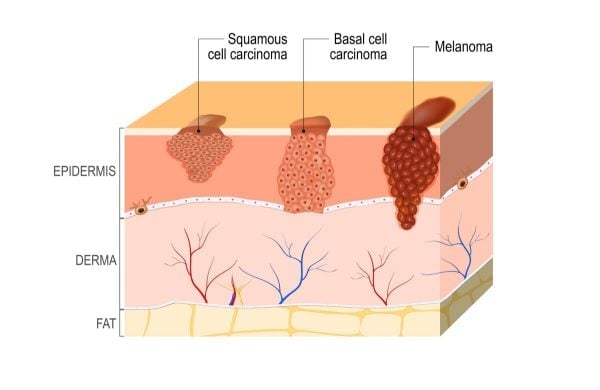
Broadly speaking, the majority of skin cancers diagnosed are either: Squamous Cell Carcinoma (SCC), Basal Cell Carcinoma (BCC) or Melanoma.

skin-cancer-diagramLet's look at Squamous Cell Carcinoma (SCC), Basal Cell Carcinoma (BCC) and Melanoma. Image: Getty.

ADVERTISEMENT

1. Squamous Cell Carcinoma (SCC).

SCCs develop in the squamous cells in the upper layer of the skin, are common on parts of the body that have the most incidental sun exposure (head, neck, hands, forearms and lower legs) and can grow and change quickly over weeks or months.

Symptoms of an SCC may include: A thickened red, scaly spot, a lump that has appeared and grown quickly, a spot that looks like a sore that hasn't healed and/or is painful or tender to touch.

2. Basal Cell Carcinoma (BCC).

BCCs are the most common type of skin cancer in Australia and they develop in the basal cells in the lowest layer of the skin.

BCCs are common on parts of the body that receive high levels of sun exposure (the areas that tend to get really burnt at the beach like the head, face, neck, shoulders and back) and grow slowly over time with little symptoms.

ADVERTISEMENT

Symptoms of a BCC may include: A pearly lump, a scaly, dry area that is shiny, something that may look like a pimple and is pale or bright pink in colour.

3. Melanoma.

Melanoma is the third most common cancer diagnosed in Australia, and is particularly common in young people - it's a life-threatening form of skin cancer because it can spread to other parts of the body via the lymph nodes (think of melanoma cells as spores).

They develop deep within the skin and can be caused by a history of unprotected sun exposure (sunburn and solarium use), and can appear all over the body and develop over a period of weeks to months.

There are different types and stages of melanoma - if caught early, melanoma is treatable. This becomes more difficult once the cancer has spread.

Symptoms of a melanoma may include: A new or existing spot, mole or freckle, a spot, mole or freckle that changes shape, colour or size and/or had a smudgy, irregular outline.

You can read more about different types of skin cancers on the Cancer Council Australia website.

Listen: We unpack cancer risks on this episode of the Well podcast below. Post continues.
What does skin cancer look like?

Now, we hear from 15 Australian women of varying ages and backgrounds who know firsthand what skin cancer really looks like.

ADVERTISEMENT

The images might be hard to look at, but we must.

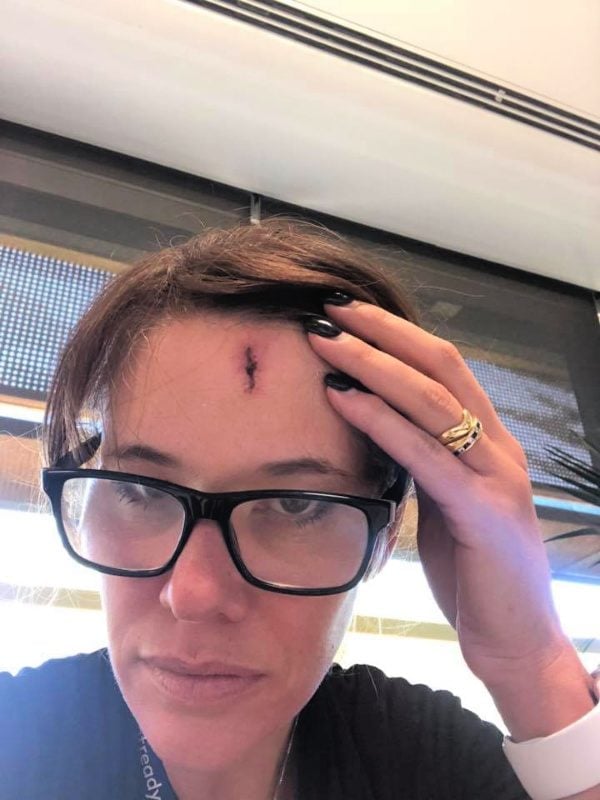
Jessie.

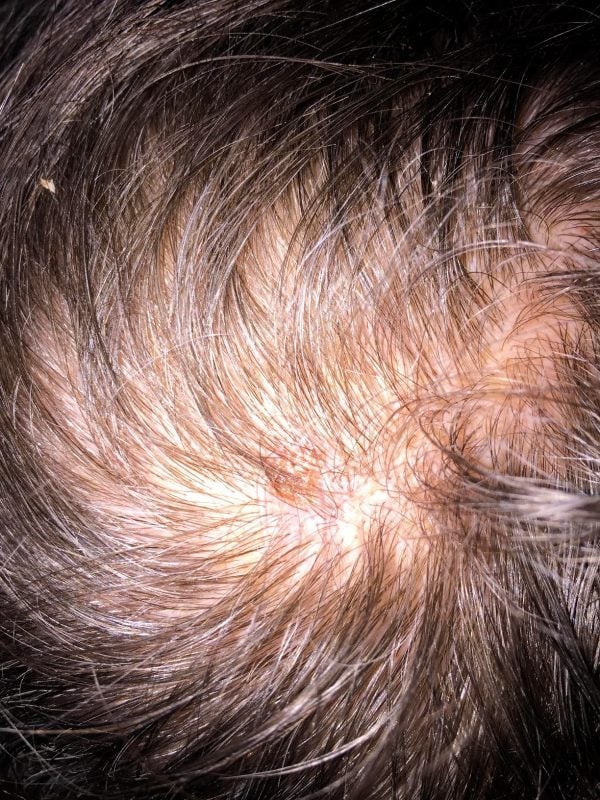
"I didn't even know I had skin cancer when this photo was taken." Image: Supplied.

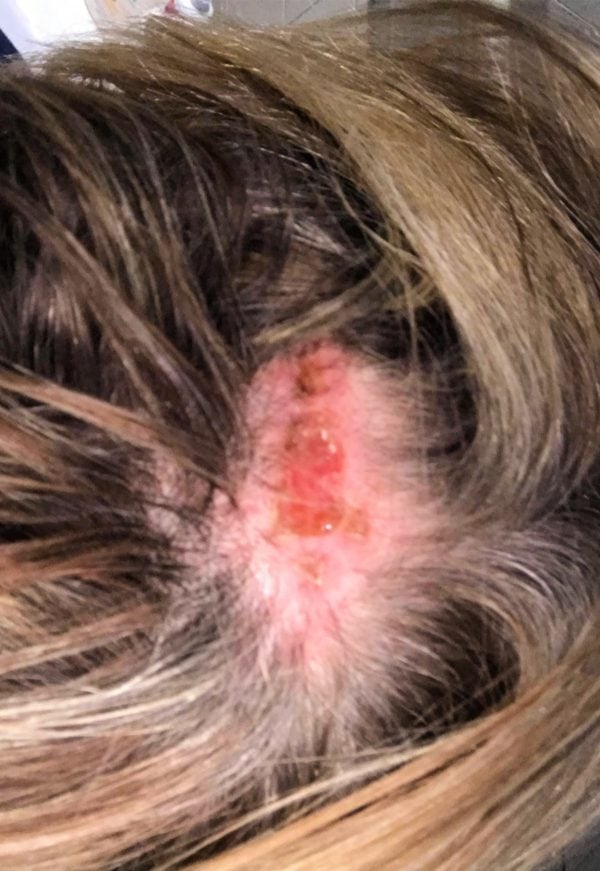
Image: Supplied.

ADVERTISEMENT

"I had a patch of dry skin on my hairline and went to the doctor twice about it because it wouldn't heal and no cream made a difference. I was actually at the doctor for my daughter, and just happened to bring it up to her doctor, and he immediately said, 'I think that's a BCC,'" Jessie said.

"He took a biopsy and sure enough, it was, and I had it removed. Apparently, it's quite a common spot because we might not apply our sunscreen all the way into our hairline, and pregnancy sort of puts the body on steroids, so these things tend to show up in the aftermath."

Pauline.

"This was me before and after immunotherapy and a lymph node dissection." Image: Supplied.

ADVERTISEMENT

"I had a mole that grew over two pregnancies and started to bleed. I also had two people say to me, 'That looks odd,' and that I should get it checked out," said Pauline.

"Unfortunately, it had spread to my lymph nodes, so I entered a clinical trial. I've been all clear now for two years, and I've since learnt about the ABCDE skin check method."

ADVERTISEMENT

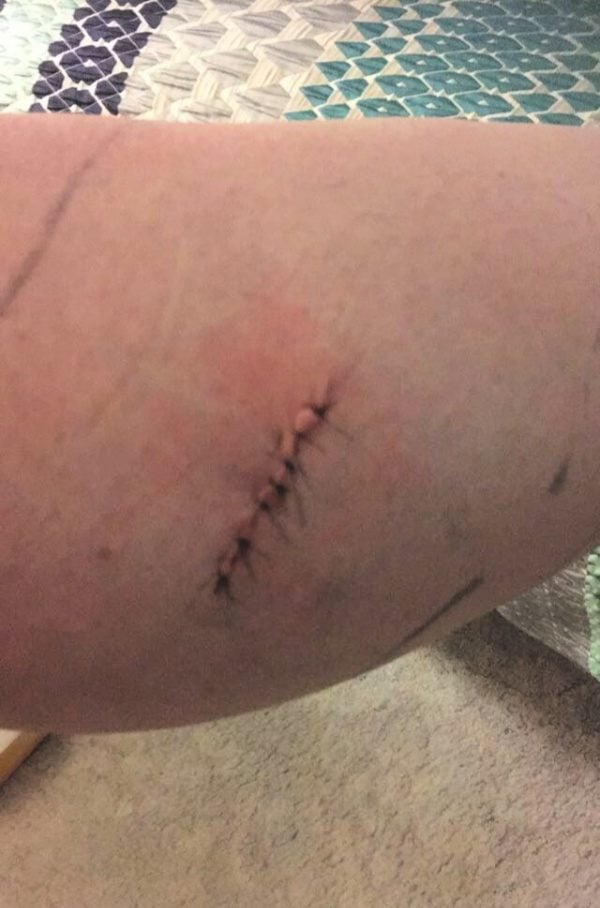
Amanda.

"I had to handle the situation with a fresh baby, during COVID and without additional family support." Image: Supplied.

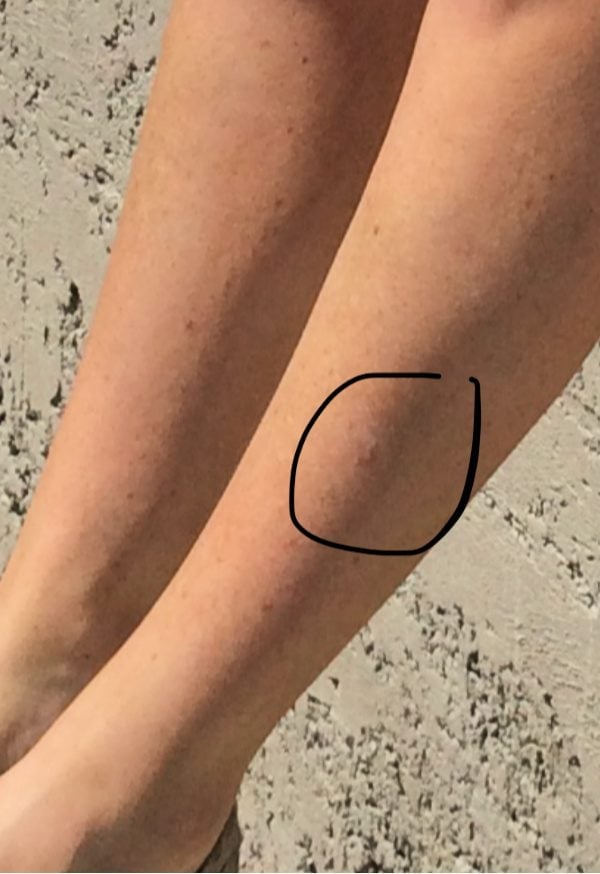
Image: Supplied.

ADVERTISEMENT

"I was 38 weeks pregnant and felt it while trying to shave my legs with a giant belly," Amanda said.

"Something in my gut told me it wasn't normal, so I went to the GP. They took photos of it and told me to sit tight, as I was having a planned C-section in a few days, and they didn't want to impact that.

"Thankfully, in my newborn bubble (first-time mum), the GP rang and asked me to come back and get it removed," she continued.

"At that appointment, the doctor took another photo and in only a few weeks, it had changed significantly. A small biopsy confirmed melanoma.

ADVERTISEMENT

"I am now on a strict six-monthly skin check schedule, and have had three suspicious ones removed since to make sure we keep them at bay."

Alison.

Image: Supplied.

"Christmas 2017, a cousin-in-law said this mole looked strange and suggested getting it checked. I'd been meaning to for ages and kept putting it off; usual 20ish-year-old things. I visited my GP, who did skin cancer checks, and he did a shave biopsy that day. Two days later, the doctor called and said come in straight away," Alison said.

ADVERTISEMENT

"I was three hours away, but went back, and he said it was melanoma. I got a referral to a dermatologist, who did a large biopsy, then confirmed we needed an even larger biopsy, about 10cm long. The dermatologist was amazing, but suggested that, due to the area, I see a plastic surgeon. He was amazing and worth every cent ($4,000)."

"Now, I see my dermatologist every 6-12 months for a check-up, which is rather costly but sooooo worth it," she added.

Catherine.

"If anyone ever tells you 'it's only skin cancer, they can just cut it out', have a look at me." Image: Supplied.

ADVERTISEMENT

Image: Supplied.

"If anyone ever tells you, 'It's only skin cancer, they can just cut it out,' have a look at me. Look at my face. Three surgeries in 15 months for 'stage one'. Please, if something has changed on your skin — please get it checked," Catherine said.

ADVERTISEMENT

"It might be new, it might be old, it might not really look like a mole? Mine looked like a patch — an 'age spot' or a 'sun spot'. All a part of getting old, right? If I'd just believed that, then God knows where I'd be today and where the melanoma could have spread. Make yourself a priority."

Erin.

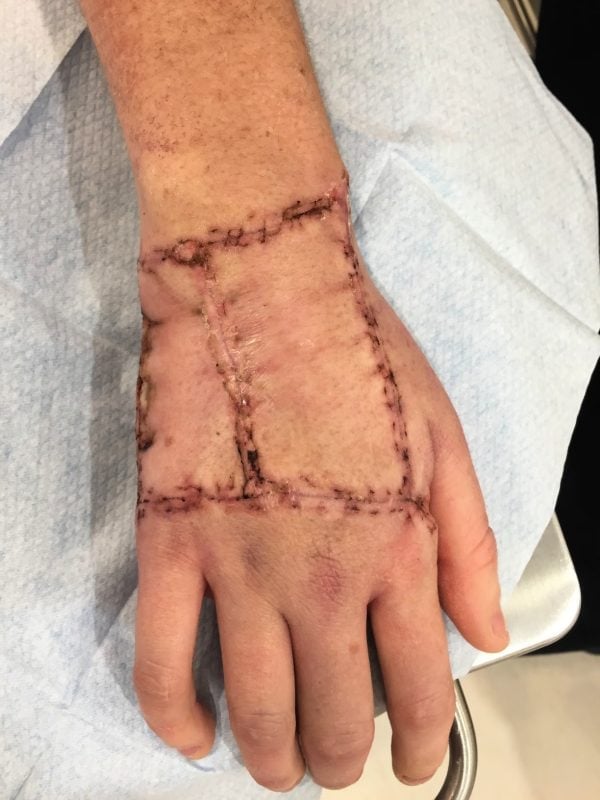
erin-skin-cancer-handThe mole on Erin's hand. Image: Supplied.

ADVERTISEMENT

erin-hand-skin-cancerErin's hand after surgery. Image: Supplied.

Erin's hand a few weeks after the operation. Image: Supplied.

ADVERTISEMENT

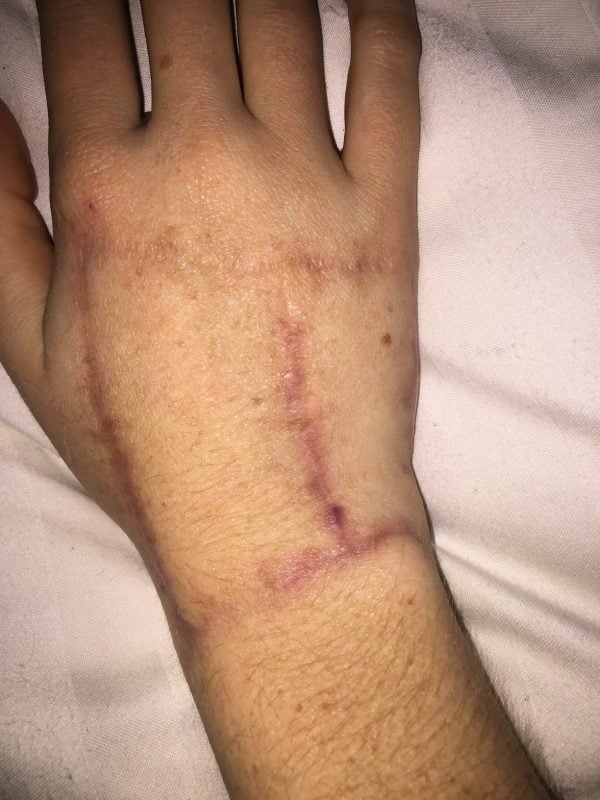
erin-hand-nowThis is what Erin's hand looks like today. Image: Supplied.

ADVERTISEMENT

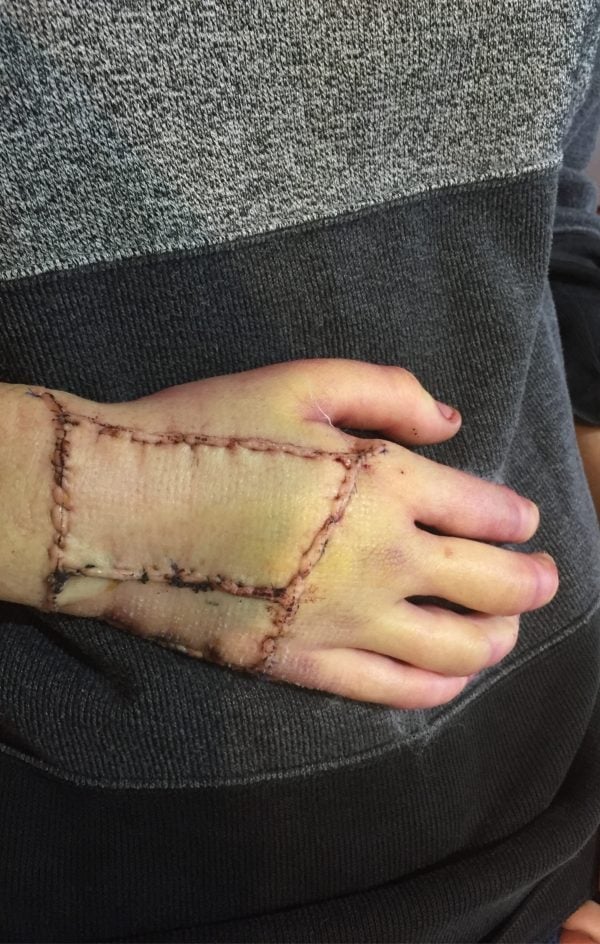
"When I was 21, I was diagnosed with stage 1 melanoma, clark level 3. It was just a small mole on the back of my hand I had had for a few years, something I never really worried about. My mum got me to have a skin check because of my fair skin and my GP suggested I get a biopsy of that particular mole. At first, the biopsy showed it as a benign mole, but I got more taken out just as a precaution, which was when we realised it was actually cancerous," Erin said.

"The melanoma showed signs of regression, meaning we didn't know how deep it was, so I also had to have the lymph nodes in my underarm my hand drained into removed and checked for cancer. Thankfully, it was all clear! I've had four operations on my hand now and I'm happy it's over, but upset there's not much awareness around being sun smart, especially here in Australia.

"Despite seeing what I went through — physically and emotionally — my friends still spent the past summer tanning without sunscreen."

ADVERTISEMENT

Louise.

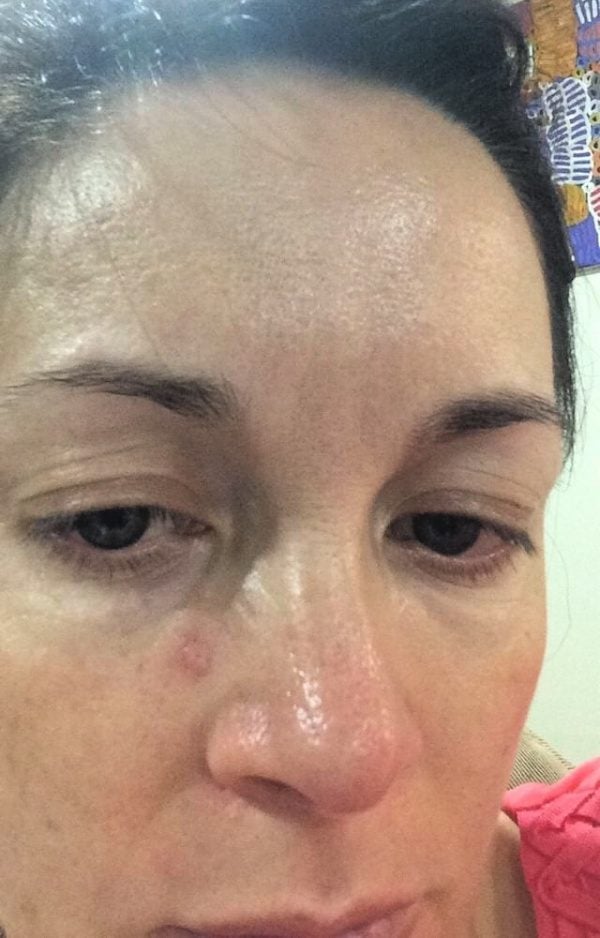
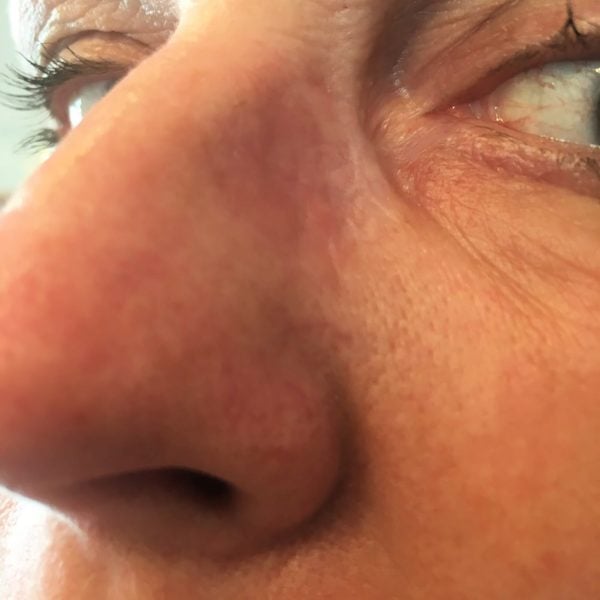
skin-cancer-noseThe tiny spot next to Louise's nose. Image: Supplied.

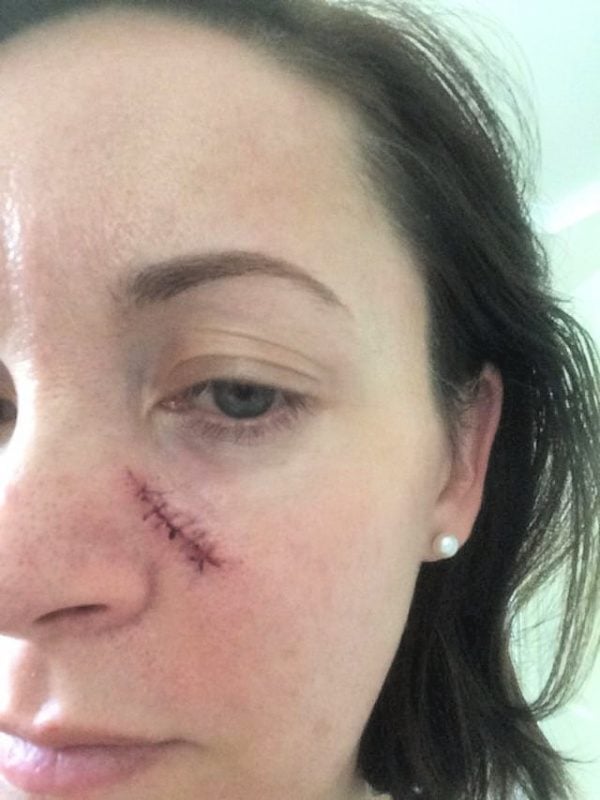
skin-cancer-noseLouise was left with this scar. Image: Supplied.

ADVERTISEMENT

"I didn't really think a great deal about sun safety growing up. To me, being 'sun safe' was not getting burnt. I grew up in the '80s and being in the sun was normal, it wasn't even compulsory to wear a hat at playtime when I was in primary school. I tried not to get burnt, but still thought it was okay to get a tan. I frequently sunbaked and, between the ages of 18-24, used the solarium most weeks. It was the "in thing" to have tanned skin and it was quite normal to go to the solarium for my age group," Louise said.

"I was pregnant at the time, and when a spot appeared next to my nose, I thought it was a growth/mole that appears during pregnancy, or a strange pimple. At my six-week postpartum check-up, I asked the GP (not a skin specialist) and she said she would burn it off, that it would probably be fine and to come back in two weeks if it hadn't gone away.

ADVERTISEMENT

"I thought it was odd to just burn it off and not do a biopsy, but I was busy with a baby so I didn't do anything more for two weeks. It hadn't changed, so I went back to the GP and said I was concerned. Again, she said it was probably nothing. I wasn't happy with that and the GP gave me a referral to see a plastic surgeon... who was based in another town, two hours' drive away, I didn't know how I was going to manage that with a newborn baby and a two-year-old."

"I ended up chatting about it with a friend and she mentioned there was a local GP in our town who specialised in skin cancer. I went and told her my story and she was very concerned the original GP had only burnt it off. The new doctor took a biopsy straight away and then rang me the next day to say it was a BCC that had infiltrated a nerve, and I needed to return to have a greater margin removed," Louise continued.

"​When I found out I had skin cancer, I was shocked. I think I was quite naive and probably didn't think it could ever happen to me, as I didn't have fair skin or any moles, and no one in my family had ever had skin cancer before. Please, please, please get your skin checked by a skin specialist every year. Stop tanning in the sun and wear SPF 50+ every day."

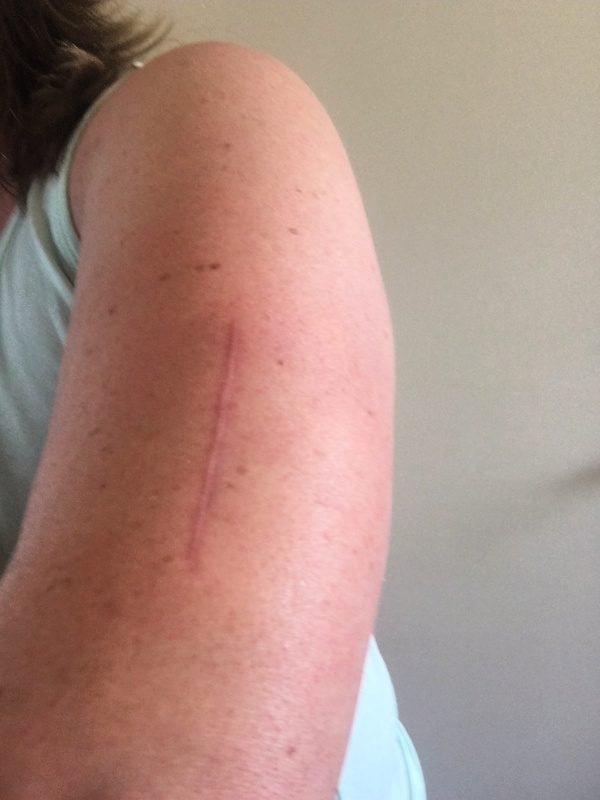
Maddy.

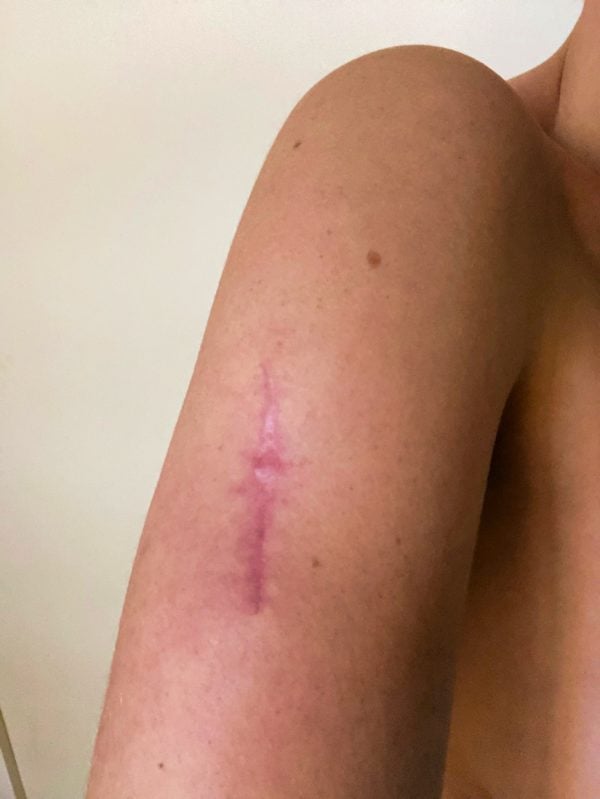
arm skin cancer scarMaddy didn't have time to take any 'before' photos of her spot. Image: Supplied.

ADVERTISEMENT

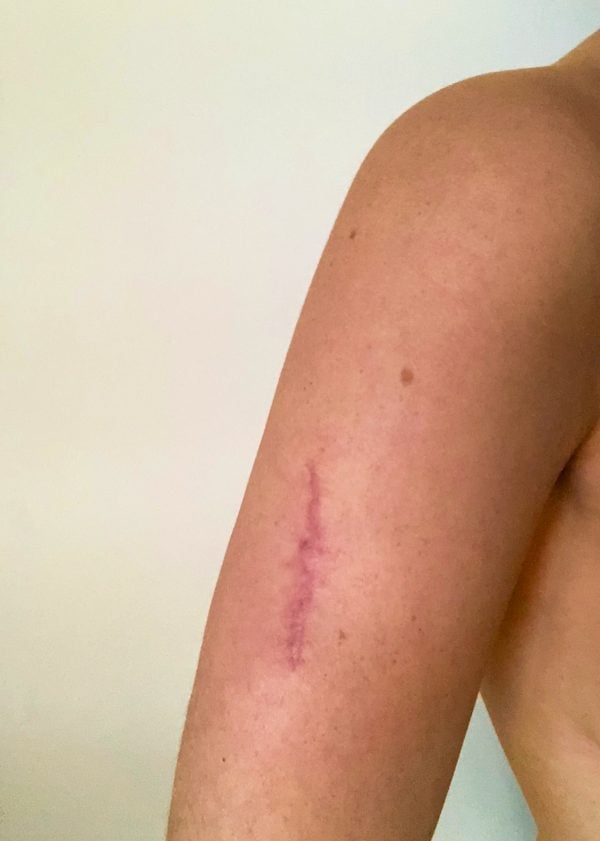
arm-skin-cancer-scar-1This is what her arm looks like today. Image: Supplied.

ADVERTISEMENT

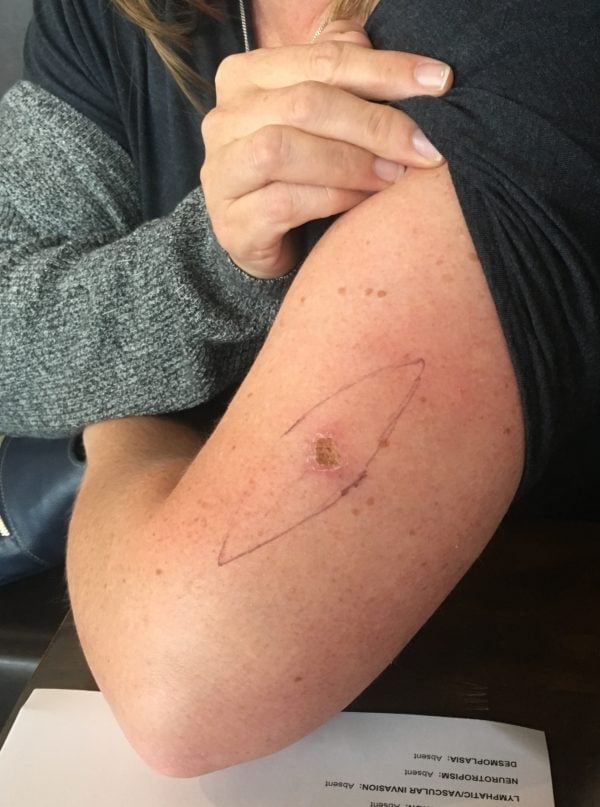
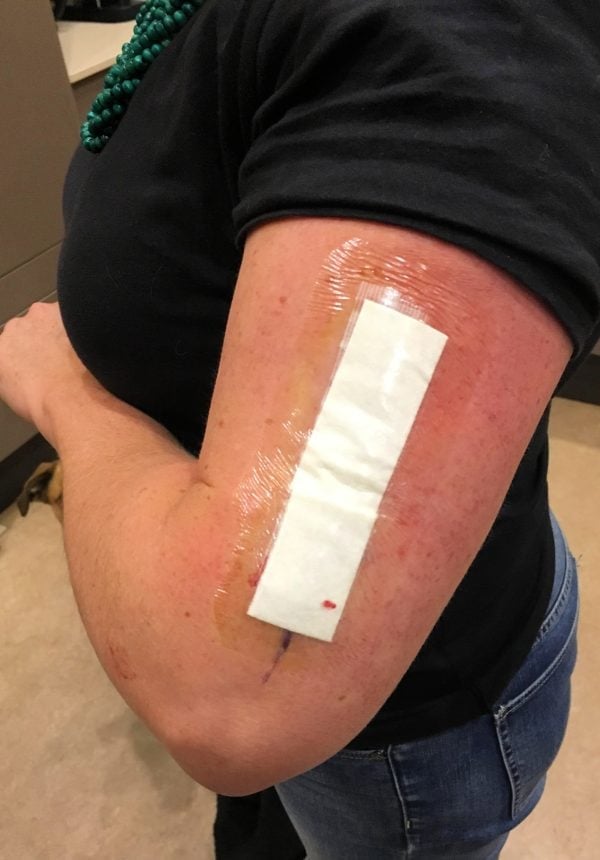
"Just over three months ago, I went for my first-ever skin check. My mum had been pestering me to go for months. When I went for the check, the doctor asked me if there were any spots of concern," Maddy said.

"I pointed out a few freckles and a 'pimple' on my arm that had been there for a couple of months. I told the doctor I thought it was an ingrown hair. He looked at it and said he would take a biopsy of it but he said it shouldn’t be anything of concern. A week later, I got a call from the doctor saying I had a melanoma on my arm."

"I am blonde and fair. I have never been a tanner. I have never used tanning oil and I have always considered myself 'sun smart'. I am a big fan of fake tan. However, after this happened to me, my outlook on the sun and looking after my skin has completely changed," she said.

ADVERTISEMENT

"I never thought at 23 I would be having a life-threatening melanoma removed from my arm. For the rest of my life, I have to get a skin check every three to six months and my chance of getting another melanoma is 20 per cent higher than the average person."

Theresa.

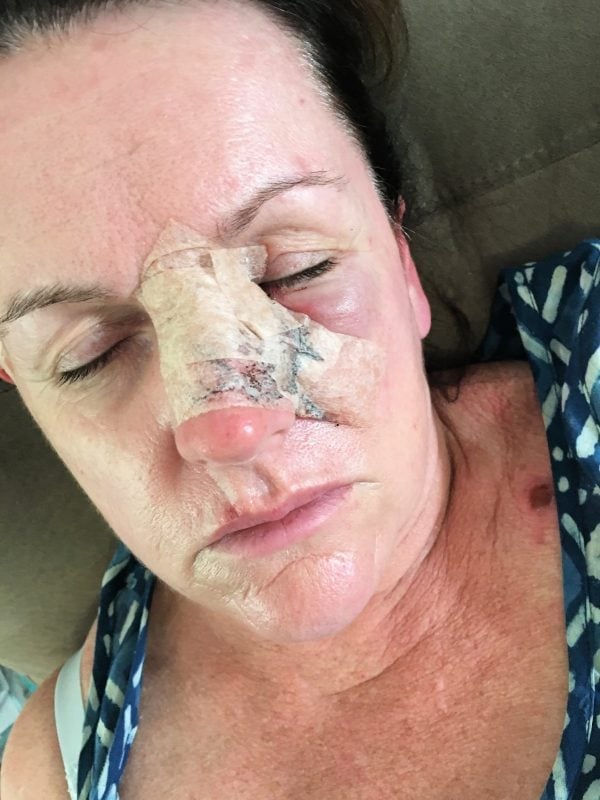
Theresa-skin-cancerImage: Supplied.

ADVERTISEMENT

Theresa-skin-cancer-3Here she is in recovery. Image: Supplied.

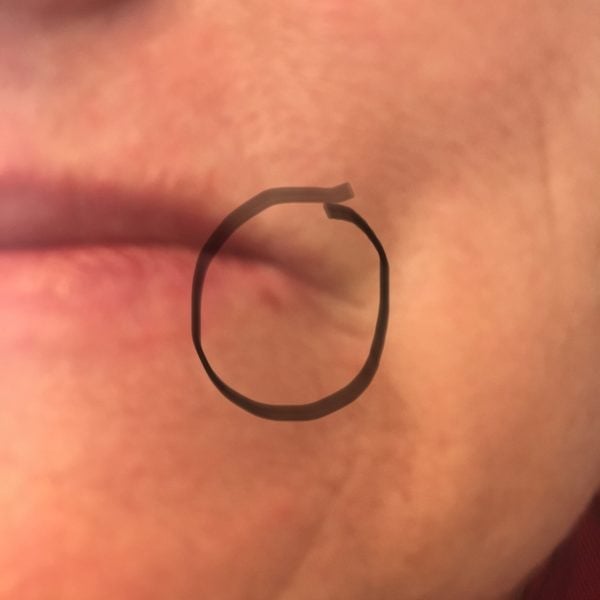
Theresa-skin-cancer-1The spot on Theresa's lip was also quite small.

ADVERTISEMENT

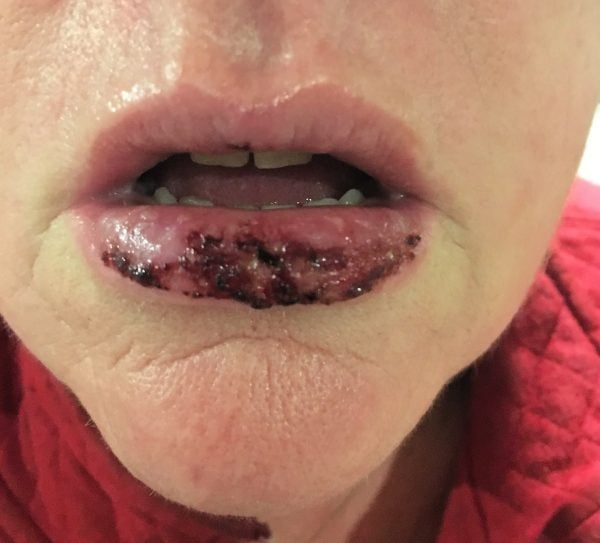
Theresa-skin-cancer-1Her recovery was very painful. Image: Supplied.

ADVERTISEMENT

"In my late forties, the company I was with offered free skin checks. I was always given the all clear. Then, just after I had turned 50, I was in Sydney visiting family, picked up my niece for a cuddle and she commented on the ‘bump on my nose’. The original little mole that was there had turned into a hard bump the size of a large pea. I hadn’t even noticed it and had no idea how long it had been there," Theresa said.

"I was referred to a dermatologist, who did a biopsy on the lump and a couple of other spots that she picked up. Once the tumour was removed, they noticed a couple of nerve endings from my eye area were within the tumour. A course of radiation was recommended so that if any cancer cells were missed in the operation, the radiation would kill them."

"When I was initially told it was a skin cancer, I was disappointed in myself. I had always been so diligent with my facial skincare routine and the products I used on my skin as far as cleaning and moisturising, but this didn't extend to sun care for my face. The mindset at the time when it came to sunscreen was that it's thick, white and gooey, so if I used anything, it would ruin my makeup," she said.

ADVERTISEMENT

"12 months after the diagnosis on my nose, I noticed a couple of spots on my lower lip that would get flaky. When I went to brush the dry skin off, I would feel a tingle. Initially, I thought it might be the cold sore virus, so I had tests for that that returned negative. My dermatologist took more biopsies and they came back as SCCs which needed to be removed ASAP.

"You think that skin cancer won’t happen to you, you naively think that because you had worn a hat and glasses or used SPF 15+ oil, that you did the right thing, but then I thought about the hours I’d spent in the sun and the numerous times I’d got burnt and peeled, I realised it was only a matter of time."

Kailey.

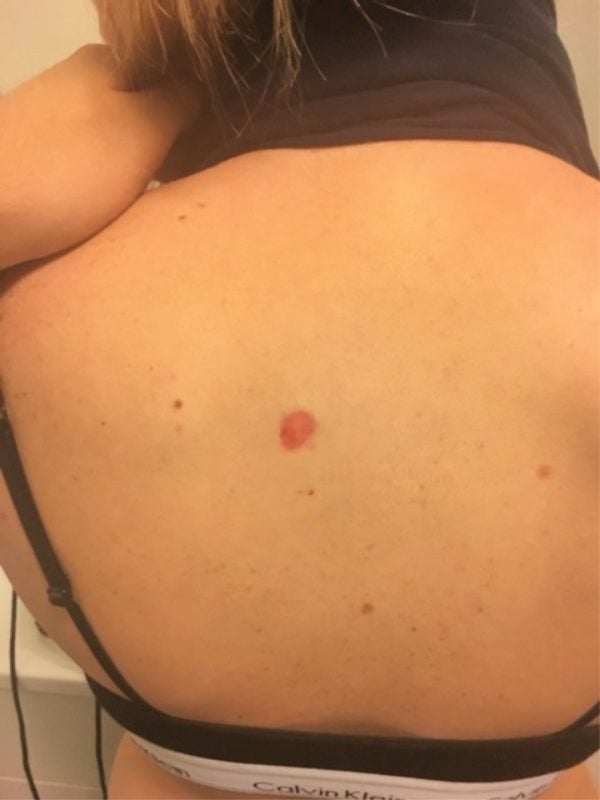
Kailey-skin-cancerThe spot on Kailey's back after her initial biopsy. Image: Supplied.

ADVERTISEMENT

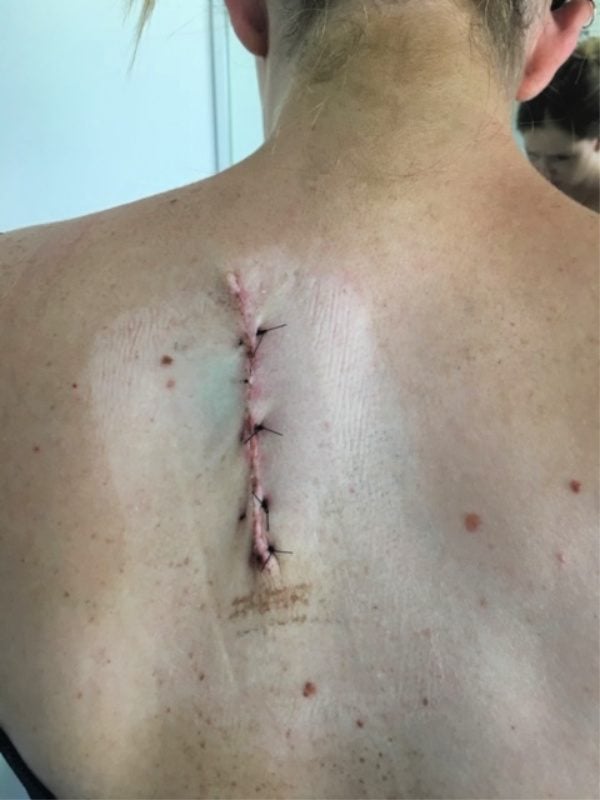
Kailey's back after surgery. Image: Supplied.

ADVERTISEMENT

skin cancerThis is what Kailey's back looks like now. Image: Supplied.

"I always had a mole on my back, but because I couldn't see it every day, I couldn’t judge whether it was changing or growing. A few people pointed it out to me (one being a very good friend of mine studying nursing) and that’s when I decided I had to get it checked. Mainly, because people were noticing it and it made me self-conscious," Kailey said.

ADVERTISEMENT

"Being fair-skinned, I definitely should’ve gotten my skin checked much earlier on. When they told me I had melanoma, I didn’t really know a lot of details about it. I had to have it cut out, as well as having my lymph nodes removed for testing to see if the melanoma had spread. Thankfully, the melanoma hadn't spread to my lymph nodes and it's all been removed."

Claire.

skin cancer picturesClaire's skin cancer was barely noticeable. Image: Supplied.

ADVERTISEMENT

skin cancer picturesThis was taken after the spot was removed. Image: Supplied.

skin cancer picturesClaire's forehead after surgery. Image: Supplied.

ADVERTISEMENT

skin cancer picturesThis is what Claire looks like now. Image: Supplied.

ADVERTISEMENT

"I've been diagnosed with skin cancer twice — first when I was 37 and a second at 44. I'm from the UK and had never really worried about skin cancer, and that was part of the problem. I can't remember my parents being concerned about it when I was little and when I was an older teen and started to travel, doing the Europe holidays with my girlfriends, getting burnt was just what happened," said Claire.

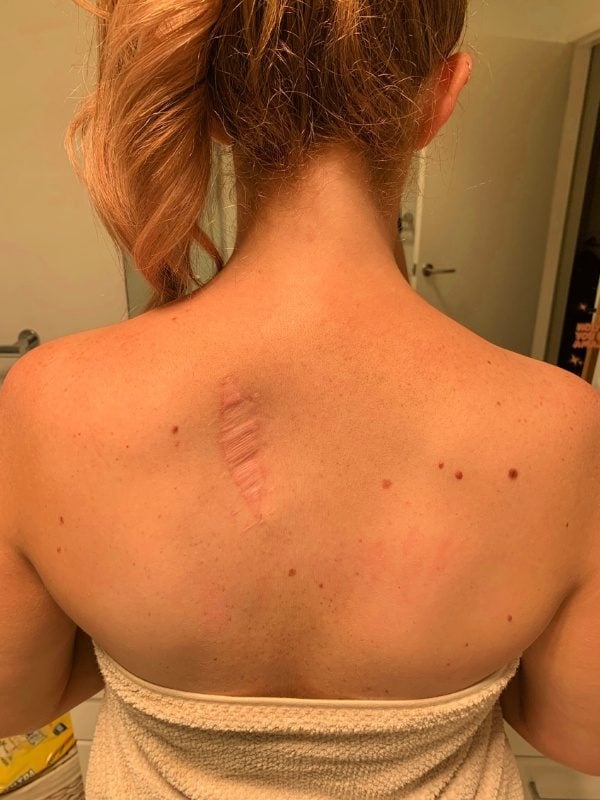
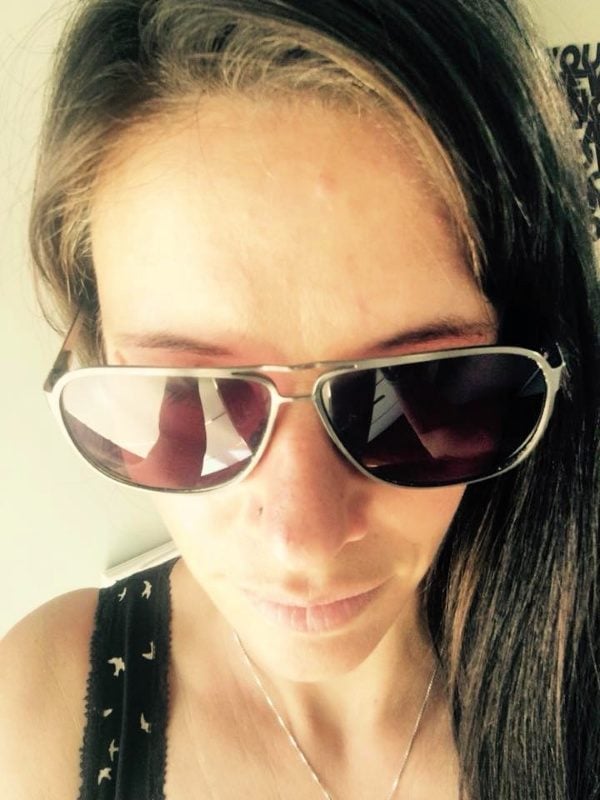
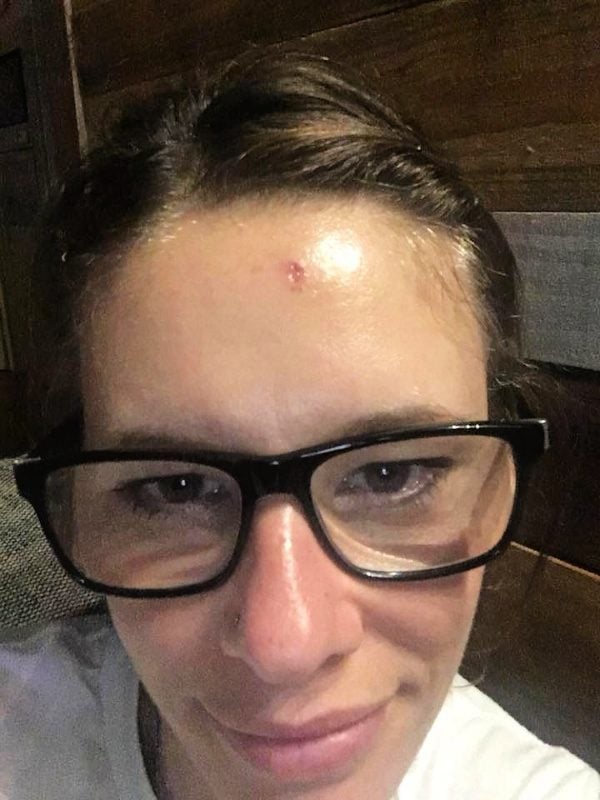
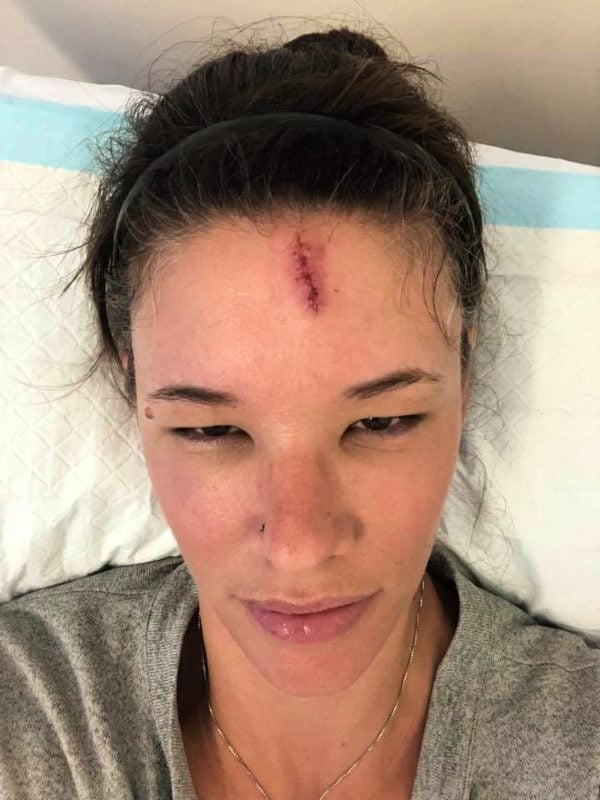
"When I moved to Australia, there was much more talk of skin checks and sun protection than I'd ever heard before. I knew I had this little patch of skin on the centre of my spine that looked flaky and dry, but as it was on my back, I didn't think about it regularly because I couldn't see it. That was my first BBC. The second cancer looked really different to my first one. It was a skin coloured pimple on my forehead.

"Currently, I'm all clear and there was nothing new at my most recent skin check. I can't 'rest' on that thought, though. Now, I'm slightly paranoid about every blemish, pimple or itch on the skin but it does mean I am fairly proactive. I want to pass on the message of the importance of getting your skin checked by a reputable professional. I pay $100 for my check, and when you think about what we currently spend on beauty products, spending this amount once a year on skin safety is a no brainer to me."

ADVERTISEMENT

Erin.

skin cancer beforeErin's love heart-shaped mole. Image: Supplied.

ADVERTISEMENT

skin cancer afterThe scar after surgery. Image: Supplied.

"When I was 20, I was diagnosed with my first melanoma. Someone commented to me that a freckle on the back of my leg looked like a love heart. I thought that was strange because I didn’t have a freckle that looked like a heart. Upon checking, I realised a large freckle that had always been there had grown in size and now did look like a heart," Erin said.

ADVERTISEMENT

"Fast forward to 2016, I had been having annual skin checks, getting moles and freckles removed here and there just to be safe. All my freckles, most of which are on my legs, were being closely watched for any changes. It was at one of these regular check ups that my dermatologist wanted to take another biopsy of a freckle we had been watching on the opposite leg. Again, it came back as another melanoma in situ and was removed a week later.

"I’ve been so lucky that both times, my melanomas, while malignant, have been only level one because they were both caught so early. I hate to think what would've happened had I left these until later thinking that young people don’t get skin cancer. Now, fake tan is my friend and I cringe when I hear people talk about tanning and their horrific sunburns."

Louise.

mole-removed-and-area-to-me-removed-later-1After Louise had her mole removed and the area marked out. Image: Supplied.

ADVERTISEMENT

After surgery. Image: Supplied.

ADVERTISEMENT

skin cancer scarThis is what Louise's scar looks like now. Image: Supplied.

"Growing up, I was always the kid who got burnt. With fair skin and lots of freckles and moles, I burned and peeled very regularly. I have had skin checks in the past, but not consistently. In November 2016, I noticed a mole on my arm was a bit redder than normal and thought I should do something about it. I didn’t see the doctor until the following May to get it properly checked out," Louise said.

ADVERTISEMENT

"As a busy working mum, I did what many women do and put myself last. It was only when I had an email reminding me to get a skin check that I followed up. I didn’t expect that my mole was melanoma, but I was happy to have it removed on the off chance that it turned nasty. I just didn’t realise that had already happened."

"I was genuinely shocked to find out it was melanoma. When my husband and I saw the doctor for the next appointment, the pathology showed the melanoma was stage 1, so we had caught it very early. My current diagnosis is all clear. I have my skin checked every six months and will do that for five years from the diagnosis. So far, so good. My risk of getting another melanoma is ten times higher than someone who hasn’t had one before, and my children’s risk of diagnosis is also double those of someone without melanoma in their family history. My advice to everyone is: check your bits – all your bits."

Bec.

bec-skin-cancerThe spot on Bec's head. Image: Supplied.

ADVERTISEMENT

bec-skin-cancerBec's forehead after surgery. Image: Supplied.

ADVERTISEMENT

"It was my hairdresser who first noticed a spot on my head, but I didn't have it checked until three years later. I think the impetus was all my children being in school and finally having some time for myself. The area had been bothering me for around six months. It started to bleed and wasn’t healing, which is a real danger sign," Bec said.

"I’m a nurse, and my husband's a doctor, so I was so angry at myself when my dermatologist mildly freaked out upon seeing it. My initial fear was melanoma, and waiting for that biopsy result was dreadful. Finding out it was a BCC was a relief, to be honest, because it's much more treatable.

"I’ve had two further early BCCs removed, but as they were caught early, they were simple biopsies. My biggest message would be: DO NOT ignore spots that don’t go away! It is so easy as a busy woman, mother or not, to put ourselves last. Had I got checked sooner, things would've been a lot simpler. Also, always wear a hat and sunscreen."

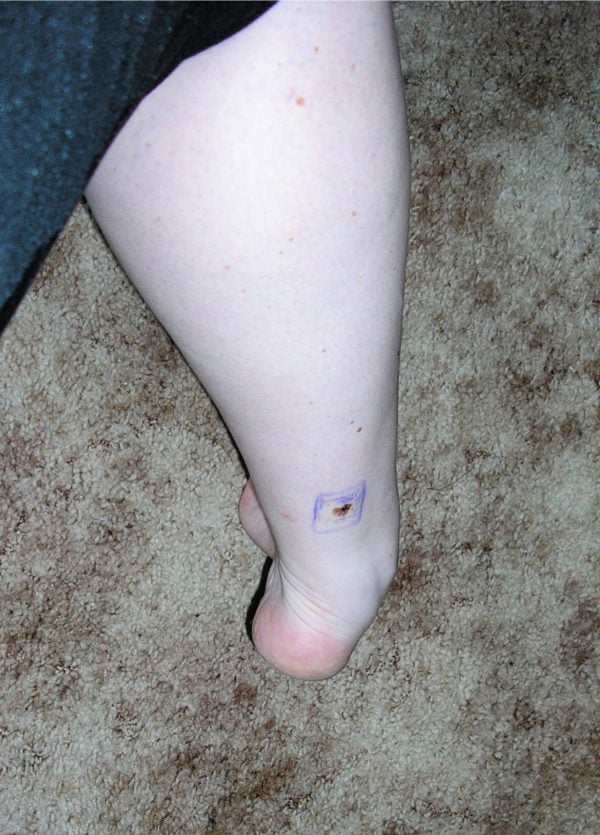
Suzie.

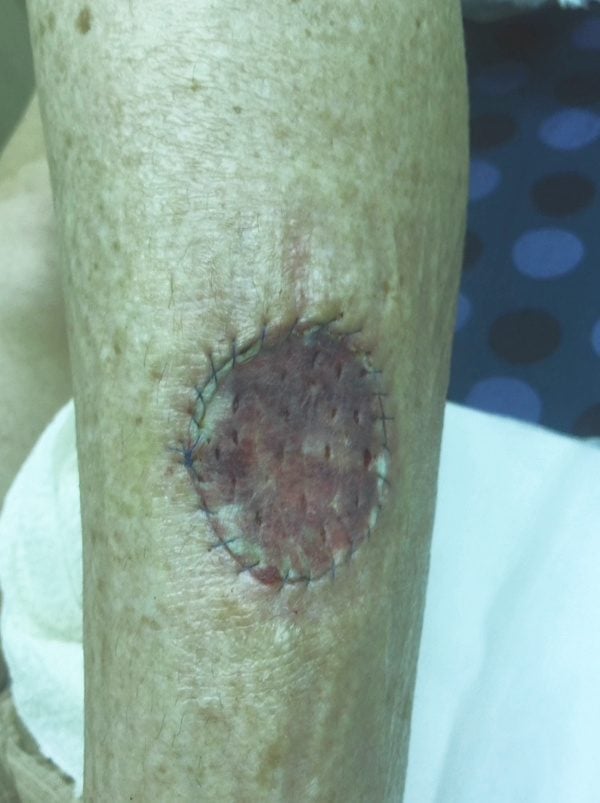
skin-cancer-legThis is how small the spot on Suzie's leg was. Image: Supplied.

ADVERTISEMENT

skin-cancer-afterThis is the scar left behind after removing the skin cancer. Image: Supplied.

ADVERTISEMENT

"I grew up in Noosa on the beach, but my parents were very diligent about sun safety. We would always be in rashies, hats, sunscreen, and I was definitely not someone who would tan at the beach. As an adult, I started relying on my GP for checks, then a local skin cancer clinic. I'd get a check every 12 months and have previously had BCCs on my legs, face and neck," Suzie said.

"That said, there was a spot on my leg that always had an element of pain to it, but I had always been told it was nothing to worry about. When I was in Bali with my brother, I knocked my leg on a massage bed. It was very painful and the spot bled, so I knew I had to get it checked as soon as I got home a few weeks later. When my doctor told me it was melanoma, I was in shock. The doctor who originally told me the spot was nothing felt terrible and made all the appointments himself."

ADVERTISEMENT

"Within 24 hours, I was at a plastic surgeon. He even called me a few times after telling me he was sure it had been nothing, justifying it by saying he had consulted his other colleagues. I never went back to that doctor but was grateful for his plastic surgeon contact. The plastic surgeon specialised in melanoma and very matter-of-factly told me I would need a month off work for the skin graft to take and I'd be having surgery within a couple of days," she continued.

"It was a 'punch in the guts' kind of year — I got skin cancer and my marriage broke down. Perspective is a funny thing. Skin cancer is preventable and we can, to an extent, control it with regular checks. The same can’t be said for other things in life.

"Obviously, we want to go back in time and tell our younger selves that sunscreen and hats are not enough, that you need to stay out of the sun and wear long sleeves. But it's also all that accidental sun exposure - walking to the car, driving, walking between buildings outdoors - that people need to be aware of. It all adds up."

Please, look after yourself and get your skin checked regularly by your GP or a skin specialist, or visit a reputable skin cancer check clinic in your area. Wear sunscreen everyday. Be sun smart.

Feature image: Supplied.

Well, Mamamia's new health brand for women, is shaped by the health experiences of women just like you.

ADVERTISEMENT

Sign up to the Well newsletter to receive your weekly dose of trusted health expertise without the medical jargon, ask a question or share your story. You can also listen to the latest podcast episode below.
undefined
Well by Mamamia. Australian women, welcome to your full-body health check. At Well, our goal is to improve the health of one million Aussie women by delivering the game-changing health info they actually need. This initiative is made possible through the support of our presenting partner, Chemist Warehouse, and our body topic sponsors, OLAY and Head & Shoulders.
Calling all travellers!

Share your travel stories in our quick survey to go in the running to win a $50 gift voucher.

Take survey →

00:00 / ???