health

'Internal decapitation.' Katlyn was treated for panic attacks while her skull slid off her spine.

The symptoms started when Katlyn Brooks was in kindergarten; vomiting, unexplained stomach issues and a sense of utter panic for no reason at all.

The Michigan schoolgirl quickly became known as the kid who would throw up daily, but her sudden shift in character signalled something was wrong.

"I was always outgoing, the funny one in class and something was just triggered," Katlyn told Mamamia.

"It started as what we thought was anxiety, and the doctor suggested seeking psychotherapy."

For years, therapy became the default solution. Traditional sessions, non-traditional treatments, medications of every kind — nothing provided relief.

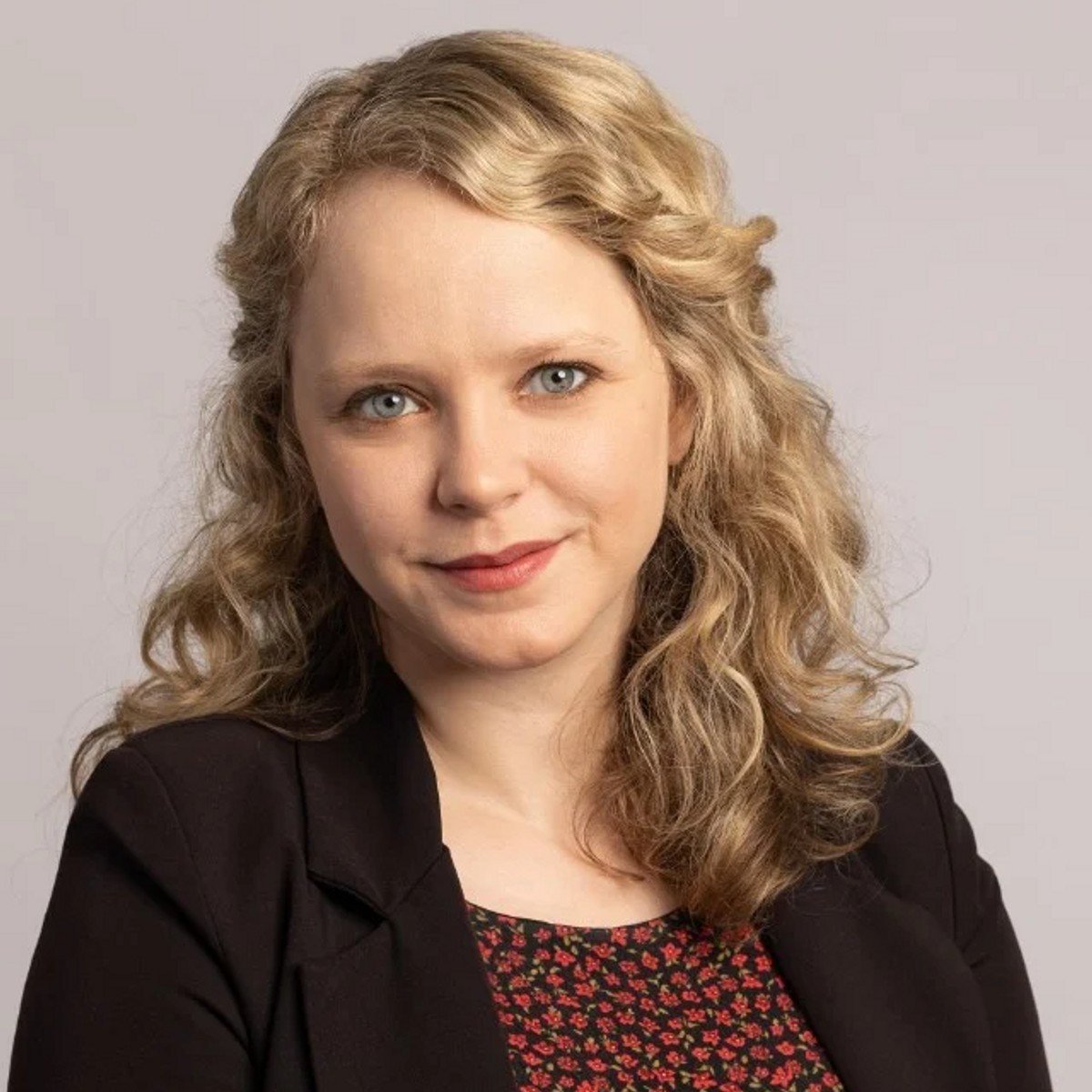
Katlyn Brooks.Katlyn's childhood was marred with unexplained illness. Image: Supplied.
ADVERTISEMENT

By high school, Katlyn realised that the root of her suffering might not be psychological.

"It wasn't until I was in high school, about grade 10, that I started to seek actual medical care versus psychological care," she said.

Still, answers didn't come. Doctors were stumped and chalked things up to anxiety. Decades passed with Katlyn's symptoms being dismissed.

Listen: What your doctor wants you to know about anxiety and depression. Post continues below.

Her symptoms were far from typical. Crushing headaches, often migraine-like in severity, that would persist for days. Nausea and vomiting could strike at any moment, leaving her drained and immobilised. Fatigue shadowed her every step, and with it came a constant fear of the unknown.

"I was 26 when we finally started to hammer down on the physical aspect," Katlyn said.

"My psychiatrist said, 'We've tried all the medications available. You've done more than enough therapy. You've tried traditional therapy, non-traditional therapy. There isn't even an ounce of relief. If there's some component of a psychological issue, you'll at least receive a little bit of relief from your symptoms.' But I didn't."

ADVERTISEMENT

Compounding the issue and Katlyn's chance of treatment was the fact that America is in the grips of a crippling opioid addiction crisis.

"I would sit in the ER for nine hours with pressure building in my head, not knowing if I would get the medication I needed — or if I was going to be told I have a drug problem," she said.

The toll extended far beyond her health.

Katlyn Brooks.Katlyn and her family moved in with her parents to alleviate the pressure of medical bills. Image: Supplied.

ADVERTISEMENT

Katlyn and her husband were raising their eight-year-old son and had to make the choice to live with her parents while navigating astronomical medical costs.

"There was this fear of the unknown; am I going to get help? Am I not going to get help?" she said.

"Do I have to suffer another night at home again? And at the same time, I have an 8-year-old son. I still have to function. I have to be productive. I have a family."

At last, a diagnosis.

By April 2024, Katlyn weighed just 40 kilograms and was vomiting nonstop.

Desperate for help, she contacted her gastroenterologist, who had treated her in the past for similar issues. This time, however, her condition was urgent: malnourished, weak, and in severe pain, her body was essentially consuming itself, causing muscle damage.

Katlyn was fitted with a feeding tube and diagnosed with idiopathic gastroparesis, a chronic digestive disorder.

That diagnosis did little to address her condition and by July 2024, she required a long hospital stay to implant a Mediport — a small device which is implanted under the skin — for total parenteral nutrition. That provided a lifeline of sugar, water, vitamins, minerals, and electrolytes.

ADVERTISEMENT

Katlyn BrooksKatlyn was fitted with a feeding tube and mediport so she could receive enough nutrition. Image: Supplied.
It was during this stay that a doctor carefully reviewed her chart, analysed her symptoms, and suggested she be evaluated for Hypermobile Ehlers-Danlos Syndrome (hEDS), which is a rare connective tissue disorder.

Katlyn was referred to a specialist and finally, she received a series of diagnoses: hEDS, Mast Cell Activation Syndrome, and the most urgent condition, Cranial Cervical Instability — a rare condition where the ligaments connecting the skull and spine loosen.

ADVERTISEMENT

A scan discovered that the mother-of-one was at imminent risk of an internal decapitation, which is immediately fatal in an estimated 70 per cent of cases.

"Finding out about my neck, that was like being thrown through a hoop," Katlyn said.

"I was two millimetres away from an internal decapitation. My neck looked like Jenga. My cervical spine, so my second vertebrae down, was completely pulled out.

"It was putting pressure on nerves and arteries. The second the vagus nerve is touched, irritated or messed with, it's going to affect your parasympathetic system.

"So that's gonna, that means that your physical state is affecting your mental state."

Katlyn Brooks.Katlyn was two milimetres away from an internal decapitation. Image: Supplied,

ADVERTISEMENT

But Katlyn had the names of conditions at last, and with those names came the chance of treatment.

"It was empowering and relieving," she said.

"It was a validating moment to know there's nothing like psychologically going on, and it is physical. It is something that you could almost cure in a way.'

Katlyn Brooks.Although the news was confronting, Katlyn said the diagnoses were also validating. Image: Supplied.
ADVERTISEMENT

A Facebook support group for people with hEDS proved to be an invaluable source of information.

There, Katlyn connected with other people navigating Cranial Cervical Instability.

"I found a post from another woman, and she said, 'Your story sounds all too familiar to mine. Here's how you can start,'" Katlyn recalled, explaining she was given a pathway for treatment.

The road to recovery.

In February 2025, Katlyn underwent a delicate, four-hour surgery in Ohio — performed by one of just five surgeons in the US capable of correcting her condition.

The transformation was immediate. Anxiety, nausea, and the sense of impending doom began to lift. Chronic pain medications and psychiatric prescriptions were no longer necessary.

ADVERTISEMENT

"The surgery has been life-changing, 180 degrees," Katlyn said. "I don't require pain medication anymore like I did, I don't have to take antidepressants anymore, I'm not on any psychiatric medication; all of my medications have been pretty much reduced."

Katlyn Brooks.The surgery was delicate and time-consuming, but it proved life-changing. Image: Supplied.
A second procedure looms to correct a tethered spinal cord, a lingering complication. But even with that ahead, the difference between life before and after her first surgery is staggering.

ADVERTISEMENT

Katlyn can finally imagine a life free from constant physical terror, and plans to prioritise her family and herself in 2026.

"I would like to move," she said. "My parents have helped me out so much that it's time that they get to retire and enjoy their lives. I want to spend time with my family, my husband and my son, and we've missed out on too many years being in the hospital."

Katlyn is now telling her story, so it can help others. She plans to write a book, raise awareness about women's health, and share her experience with hypermobile Ehlers-Danlos syndrome and cranial cervical instability.

Katlyn Brooks.Katlyn hopes her story helps others. Image: Supplied.
ADVERTISEMENT

"There's no reason that I was put through 20 years of complete utter chaos and misdiagnosis and just not being heard for me to not raise my own voice for other people," she said.

"I'm alive. I'm here. I'm present. That's more than I could ask for."

Katlyn shared a final message to women who may be struggling to find their way to a diagnosis.

"My biggest help was to stay calm," she said.

"There are a lot of people who will go into the doctor's office, get angry, get frustrated, and not understand what they're going through at the same time. The doctors are stumped just as well.

"So walk in calmly, but don't stop walking in."

Years of misdiagnosis and hospitalisations have left Katlyn Brooks with staggering medical expenses. A crowdfunding page has been created to help her navigate the costs.

Feature image: Supplied.
Calling all Australians aged 18+!

We want to know about your relationship with insurance products. Complete our survey now for a chance to win a $1,000 gift voucher in our quarterly draw!

Take survey →

00:00 / ???