friendship

'The worst friend you can be is a "finger princess". I've just realised I am one.'

Want to support independent women's media? Become a Mamamia subscriber and get an all-access pass to everything we make, including exclusive podcasts, articles, videos and our exercise app, MOVE.

It takes all types to make up a friendship group. There's the 'Nicole' (the organiser) and the 'Personality Hire', who ensures there's never a dull moment.

We have the 'Nurturer', the first on the scene of any crisis, and where would we be without the no-nonsense honesty and reality checks from 'Straight Shooter'?

Then there's the 'MacGyver'. This is the person who can fix a broken heel with duct tape or open a wine bottle with a shoe.

Every archetype is essential to keep the group ecosystem functioning. But recently, a new group member has been identified and outed in corners of the internet, one who isn't exactly pulling their weight and has been labelled a little "red flaggy."

Watch: The most 'fraught' friendship behaviour. Post continues below.


Video: Mamamia

The "Finger Princess".

Derived from the Korean slang ping-peu (a portmanteau of "finger" and "princess"), it describes someone who refuses to "lift a finger" to look up information, instead relying on friends or family to answer questions they could easily Google.

And I think I might be one.
ADVERTISEMENT

Admittedly, ChatGPT has saved me recently, doing the heavy lifting and giving my friends a much-needed reprieve.

But if I need to know what date school goes back, I am categorically guilty of turning to the group chat and waiting for 'Nicole' to tell me, despite everyone having access to the same information.

The power outage that changed everything.

Stop the press. As I sat here writing this, spiralling in self-doubt and self-realisation, the power went out in my house.

I went to the power meter, looked at it, and without a second thought, I texted my group chat a photo of my fuse box addressed to the 'MacGyver', Lou.

"I'm thinking this is a Lou-directed question, no offence to everyone else. My power is out, and they all look in the right spot. Haven't touched them, thoughts? Should I switch them all off and on?"

I acted as if I were at risk of being electrocuted. MacGyver Lou started sending instructions; Emma, the Nicole, chimed in. When nothing worked, I naturally panic-called Lou.

That's when it hit me. I am categorically a "Finger Princess". I am a walking, talking red flag.

Lou very patiently Googled and talked me through my power crisis. After trying every switch, she finally instructed me to knock on the neighbour's door.

It turns out the power was out for the whole block of units, requiring an electrician, well above MacGyver's pay grade.

But it got me thinking: Why did I panic and outsource my problem? The only way I can describe it is that, at that moment, I felt incapable. I needed a voice of reason.

The psychology of the "offloader".

Seeking a reason for my sudden inability to function, I turned to Bre Elder, senior psychologist at The Indigo Project, who told me that my "incapability" might actually be a modern, albeit exhausting, coping mechanism.

ADVERTISEMENT

Elder explained that in our current climate of information overload, many of us are unconsciously engaging in "cognitive outsourcing" or "relational offloading".

"With the overwhelming volume of information available... some individuals default to using their trusted relationships as a shortcut to bypass this exhausting process," she said.

It was a humbling reality check. I wasn't just "asking a quick question"; I was essentially offloading my mental fatigue onto my friends because I trusted their brainpower more than my own.

Elder warned that while this feels like a shortcut for me, it's a "one-directional" drain that eventually depletes the emotional resources of the people I love most.

Yikes. I am starting to see why this story may have been 'assigned' to me…

Is it helplessness or a bid for connection?

Standing in the dark in front of that fuse box, I felt genuinely small and incompetent.

But Elder noted that the "finger princess" phenomenon often wears a mask. While it can look like learnt helplessness, it's often a "bid for connection disguised as a practical request".

This part hit home. Was I actually scared of the power board, or did I just want to feel "held" by my friends in a moment of stress?

According to Elder, the differentiator is whether we actually learn from the help we get. "Someone genuinely seeking help will show appreciation... and eventually develop the skill themselves," she said.

A true Finger Princess, however, keeps coming back for the same answers because "the real goal is engagement, not the answer itself".

ADVERTISEMENT

I realised then that if I keep asking Lou how to fix things without ever picking up the tools myself, I'm not being a student, I'm being a burden.

Learning to lift a finger.

It's a hard pill to swallow, realising you've been the "red flag" friend. Elder said that the best thing my friends can do for me is to set a firm boundary.

She suggested that the "MacGyvers" and "Nicoles" of the world should feel empowered to say: "I'm happy to help occasionally, but I'm feeling stretched thin. Would you be open to trying first?"

Initially, that could sound cold. But Elder pointed out that redirecting a friend to their own self-sufficiency is actually "supporting their growth and competence in the long run". Message received.

The realisation has been a wake-up call. Being a "finger princess" isn't a cute personality quirk; it's a failure to respect my friends' time.

I've learnt that I need to sit with my own panic for a second, open a browser, and turn to Google, or ChatGPT, before I turn to the group chat.

The next time the lights go out, I'm going to prove to myself (and poor Lou) that I can find the answer on my own. It's time I started pulling my weight, one search bar at a time.

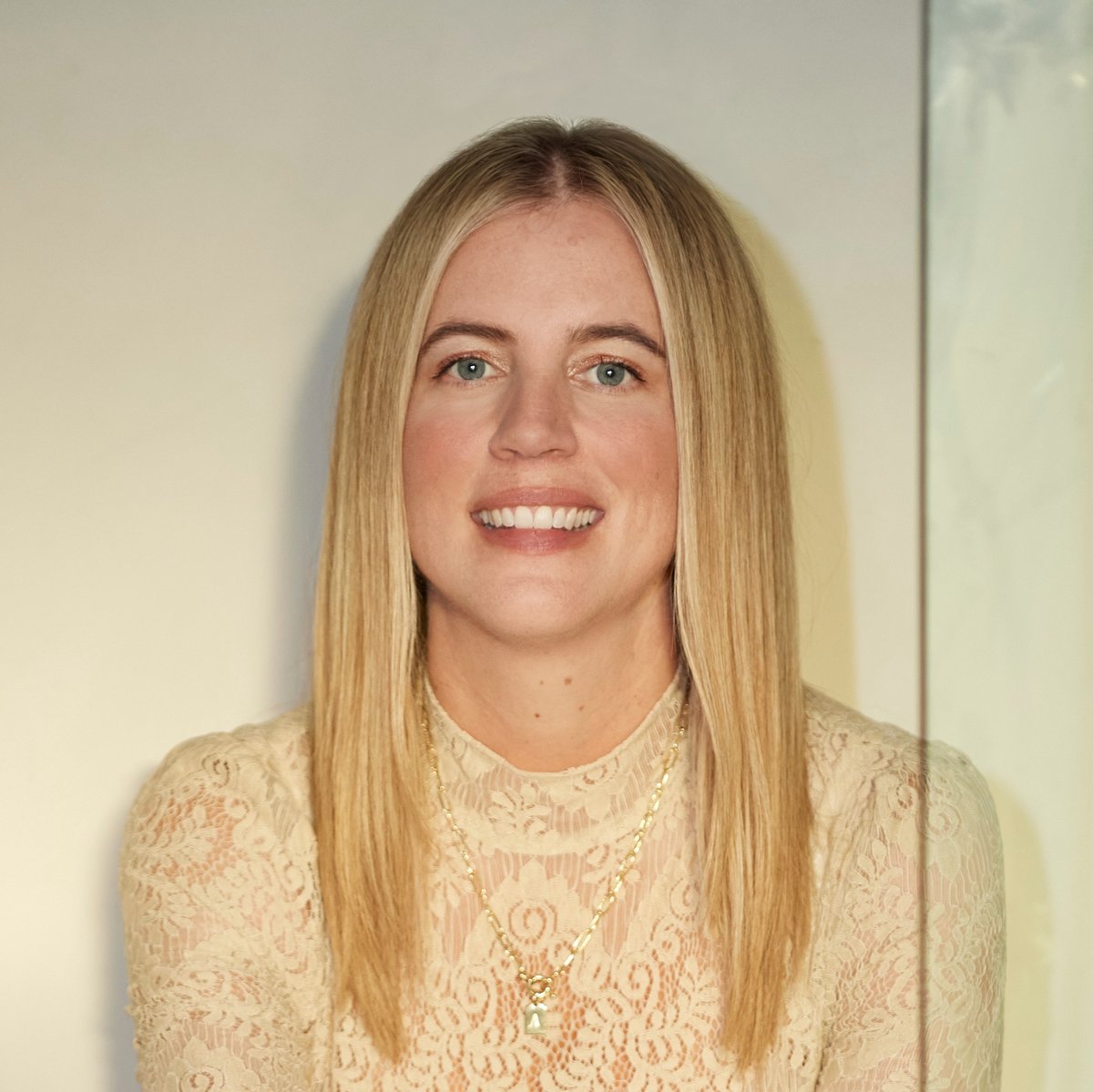
Feature Image: Supplied/crown added with Ai ChatGPT.

You can reach out to senior psychologist Bre Elder via The Indigo Project, a progressive online therapy practice with a carefully curated team of over 20 psychologists and counsellors.

Are you working full-time, or running your own small business?

We want to hear from you! Complete our 3 minute survey for a chance to win a $1,000 gift voucher in our quarterly draw!

Take survey →

00:00 / ???