true crime

The 8 biggest revelations from Netflix's Lucy Letby documentary.

A UK nurse convicted of murdering seven babies — and attempting to murder seven others.

15 whole-term life sentences.

Britain's 'worst ever' child serial killer.

You may have seen The Investigation of Lucy Letby pop up on your Netflix this week. The 90-minute film revisits the case of the neonatal nurse whose conviction remains one of the UK's most polarising verdicts.

Following Letby's conviction, Netflix says Cheshire police offered "unparalleled and exclusive access" behind the curtain of the investigation.

The film, released on Wednesday, follows the twists and turns of a case that appeared black and white upon conviction, but has since seen multiple medical experts — led by neonatologist Dr Shoo Lee — question the medical evidence given in court.

Some see Letby as a victim of a catastrophic failure of justice. Others see a monster hiding in plain sight.

Here are the key takeaways you need to know from this new tranche of interviews and expert testimony on the convicted serial killer.

Watch: The trailer for The Investigation of Lucy Letby. Article continues after video.

Video via Netflix
ADVERTISEMENT

1. Did Lucy Letby write a 'confessional' note?

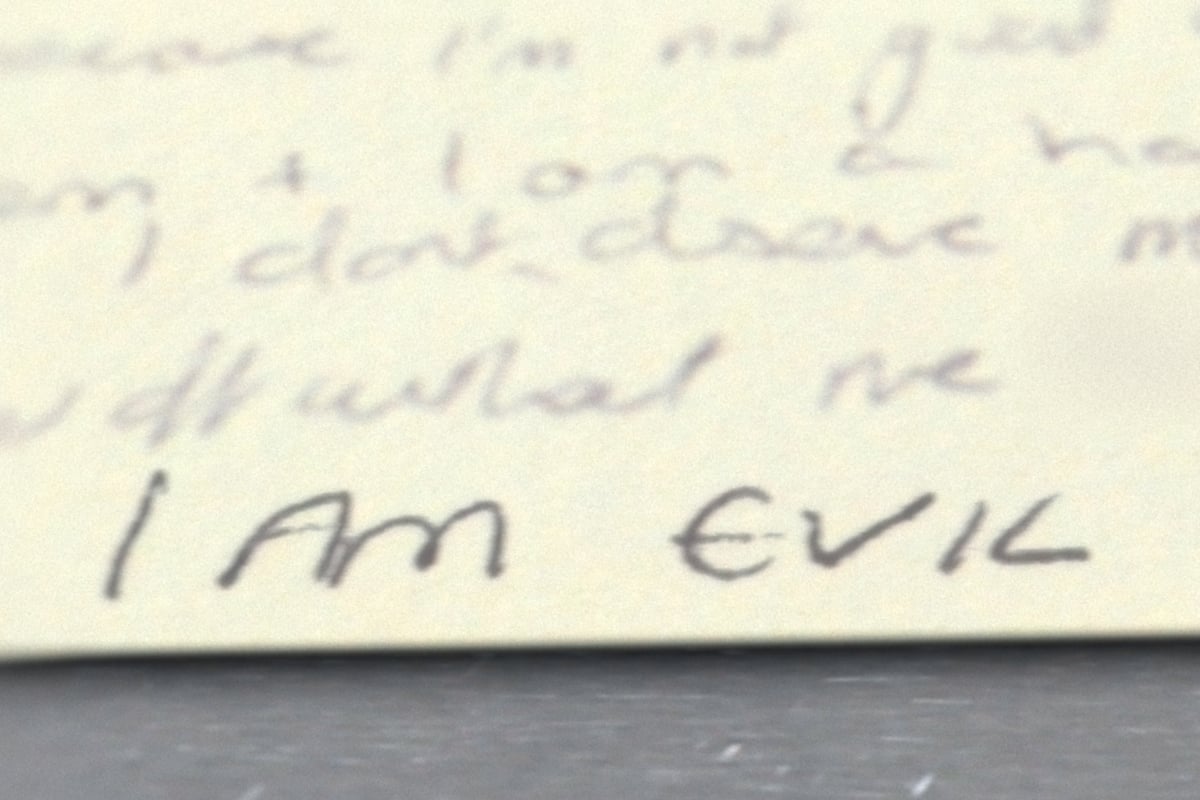
One of the most damning pieces of evidence in the original trial was a handwritten note found in Letby's home stating, "I killed them on purpose because I am not good enough." 

However, the Netflix documentary covers Letby's claim that she wrote those words at the suggestion of a counsellor to process her feelings of extreme guilt and panic after being removed from the unit. 

Her defence argues that the jury never heard the other claims of innocence she wrote, which contained contradictions like, "I haven't done anything wrong." 

Lucy Letby handwritten noteImage: Netflix

ADVERTISEMENT

Still to this day, Letby has never confessed in any official capacity. In fact, she has consistently denied the allegations in police interviews, and attested that she loved her job.

2. A mother's testimony. 

During Lucy Letby's investigation, the babies were publicly identified using letters: Baby A, Baby B, Baby C, Baby D. This was done to keep the families anonymous.

However, the Netflix documentary includes the harrowing testimony of Sarah* (not her real name), who is the mother of Baby D, known in the documentary as Zoe* (not her real name).

Sarah explains that she went through a gruelling 60-hour labour and an emergency C-section, with her baby deemed stable and improving in intensive care.

She recounts the moment that she was woken in the night and rushed down the corridor to her baby's bedside, only to witness medical staff desperately attempting to resuscitate her daughter. Finally, she was told to "let her go".

"I was just so angry, and so sad, and so confused," Sarah said, adding that she felt she'd 'failed as a mum'.

ADVERTISEMENT

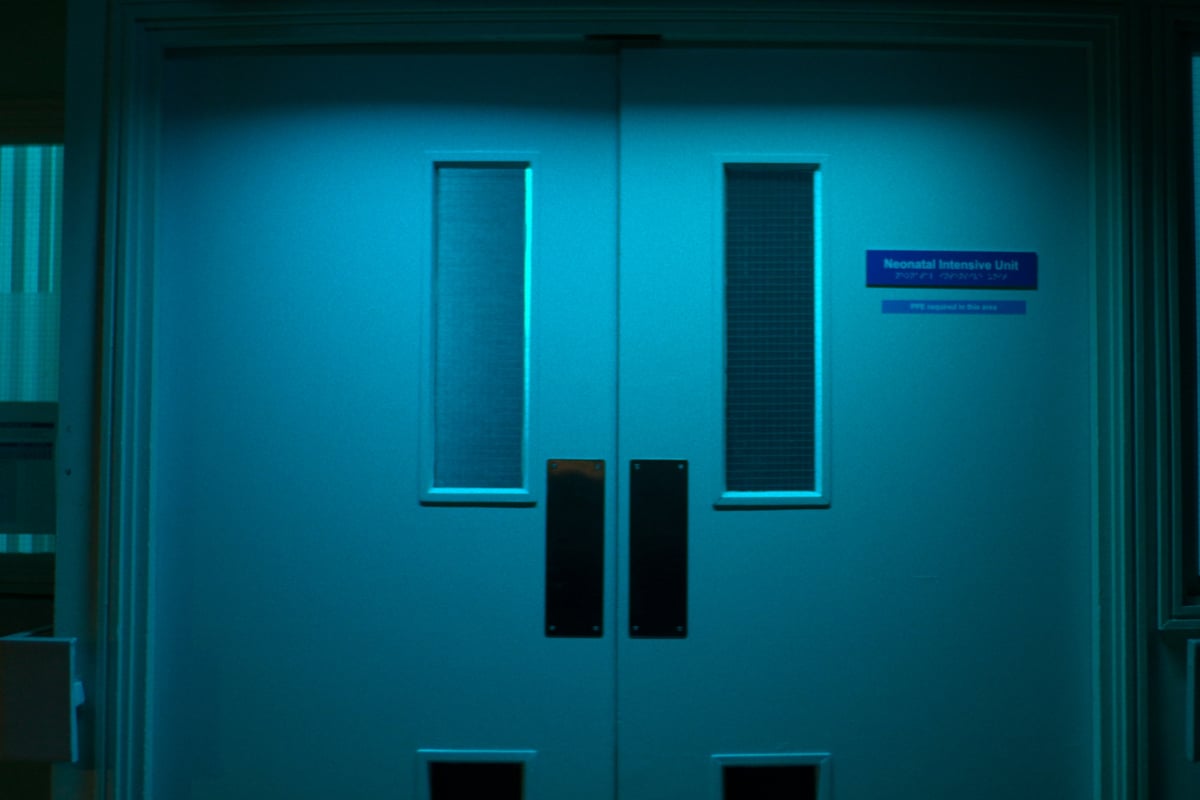
Hospital doorsImage: Netflix

The prosecution argued — and the jury accepted — that Zoe had air injected into her bloodstream.

At the trial, Sarah said she summoned all her bravery to face Letby as she took the stand.

"I sat three metres away from her. She looked at me a dozen times, staring. Every time she looked at me, I'd have to look down," she said.

ADVERTISEMENT

One of the most startling things is that Letby claimed to remember almost every other infant except for Zoe — a detail Sarah found impossible to reconcile with their face-to-face interactions.

She claims the nurse was often seen lingering near the incubator with a clipboard, appearing to watch the family without performing any actual medical tasks. 

3. The drop in infant mortality rates following Letby's arrest. 

Mark McDonald, a criminal defence barrister, is part of Letby's legal team. His belief is that nobody actually saw her do anything wrong, there was no motive, no CCTV evidence — nothing.

He refutes the prosecution's argument that infant mortality rates dropped after Letby was removed from the neonatal ward, suggesting she was the reason for the deaths.

In the documentary, and a 2024 article in The New Yorker, it's suggested that this drop may have had nothing to do with Letby.

The Countess of Chester hospital was significantly downgraded following her departure. By no longer accepting the most "high-risk" or severely premature babies, the ward's natural mortality rate would have dropped regardless of who was on shift.

It questions whether the issue was with Letby or the hospital itself.

4. Misinterpretation of research. 

A pivotal moment in the film features Dr. Shoo Lee, a world-renowned neonatologist.

He expresses deep concern that his own research on air embolisms — used by the prosecution to prove Letby injected air into babies' systems — was misinterpreted.

ADVERTISEMENT

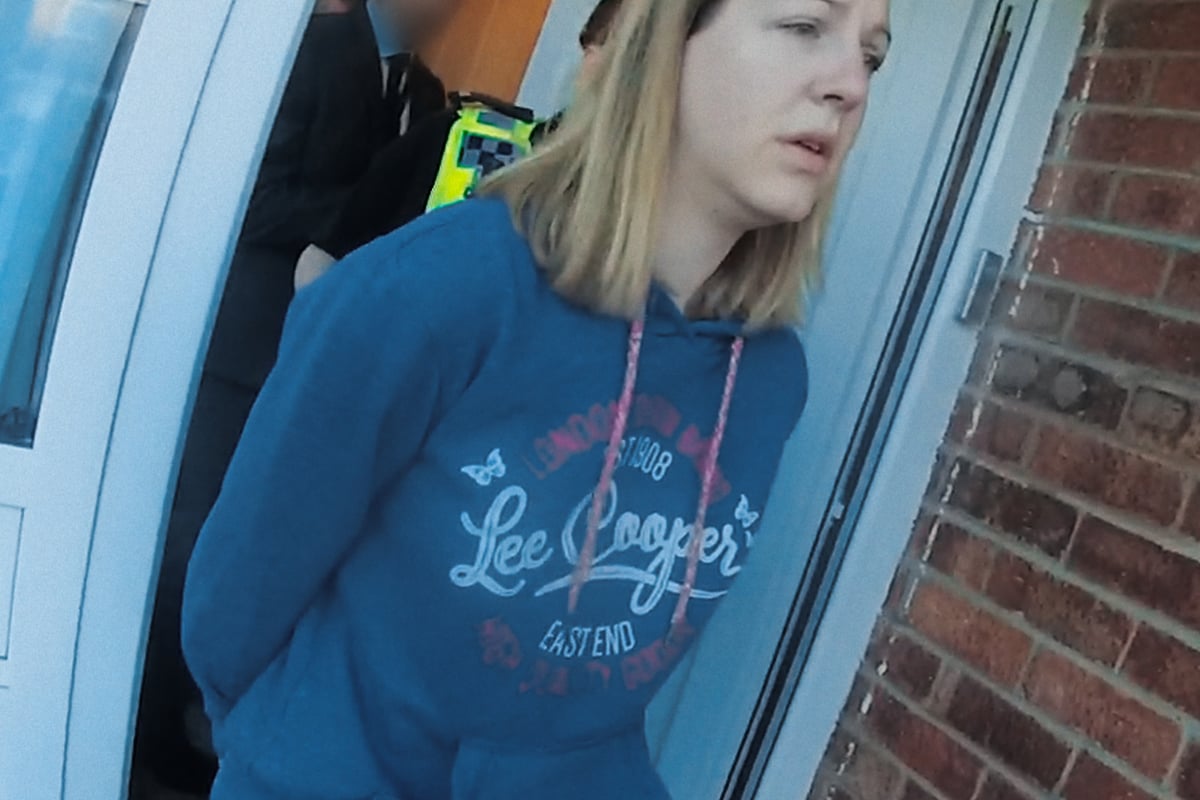
Lucy LetbyImage: Netflix

Dr. Lee suggests the skin discolorations described by witnesses actually pointed to hypoxia (lack of oxygen) rather than intentional harm, potentially undermining the medical basis for the convictions.

ADVERTISEMENT

5. The overtime shifts. 

The spike in deaths coinciding with Letby's shifts was used to illustrate her presence at every tragedy in court.

However, criminal barrister Mark McDonald points out that Letby was an exceptionally high-achieving nurse who frequently volunteered for extra shifts. 

The documentary suggests that her presence was a statistical likelihood for any staff member working maximum hours in a struggling, understaffed department.

6. The mystery of the contaminated nutrition bags.

The prosecution argued that two babies were poisoned with insulin via nutrition bags, and Letby's signature was on the paperwork. 

NeedleImage: Netflix

ADVERTISEMENT

While Letby herself eventually accepted that the bags were tampered with, the documentary highlights a glaring lack of direct evidence.

No one ever saw her inject the bags, and they were accessible to numerous staff members in a ward with no CCTV coverage in clinical areas.

7. The hoarding of handover sheets.

Police discovered nearly 250 confidential handover sheets in a box marked "keep" at Letby's home.

While the prosecution viewed this as a "macabre trophy collection," Letby maintained they were accidentally taken home in her pockets — a habit she claimed was common among busy nurses. 

While Letby claimed she couldn't destroy the sensitive files because she lacked the equipment, police did discover a shredder during their search of her home.

Additionally, investigators found personal diary entries where Letby had noted the initials of specific infants on the exact dates they had collapsed or died, creating what the prosecution described as a chilling personal record of the tragedies.

8. The theory of hospital failure. 

One of the biggest questions the documentary poses is: was there an issue at the Countess of Chester hospital?

Letby's defence team has assembled a panel of international experts who argue the 'spike' in deaths at the hospital could be attributed to systemic failures.

ADVERTISEMENT

They allege that inadequately trained personnel, a lack of available doctors during emergencies, and poor hygiene standards all could have contributed.

Detective Superintendent Paul Hughes, who investigated the case, says he has no doubts about Letby's conviction.

However, Chester hospital consultant, Dr John Gibbs, says he has moments where he isn't one hundred per cent sure.

"I live with two guilts," he says.

"Guilt that we let the babies down, and tiny, tiny, tiny guilt: did we get the wrong person? You know, just in case: a miscarriage of justice. I don't think there was a miscarriage of justice, but you worry that no one actually saw her do it."

While this is a small olive branch, it is the first public admission of doubt from one of the doctors at the hospital about the babies' deaths on their unit.

While the documentary critiques how the case was handled, it's important to note that no court has overturned the convictions, and official inquiries continue alongside legal review by the Criminal Cases Review Commission.

Feature Image: BBC/Netflix.

Calling all past 3 months retail shoppers!

Complete our survey for a chance to win a $1,000 gift voucher in our quarterly draw!

Take survey →

00:00 / ???