family

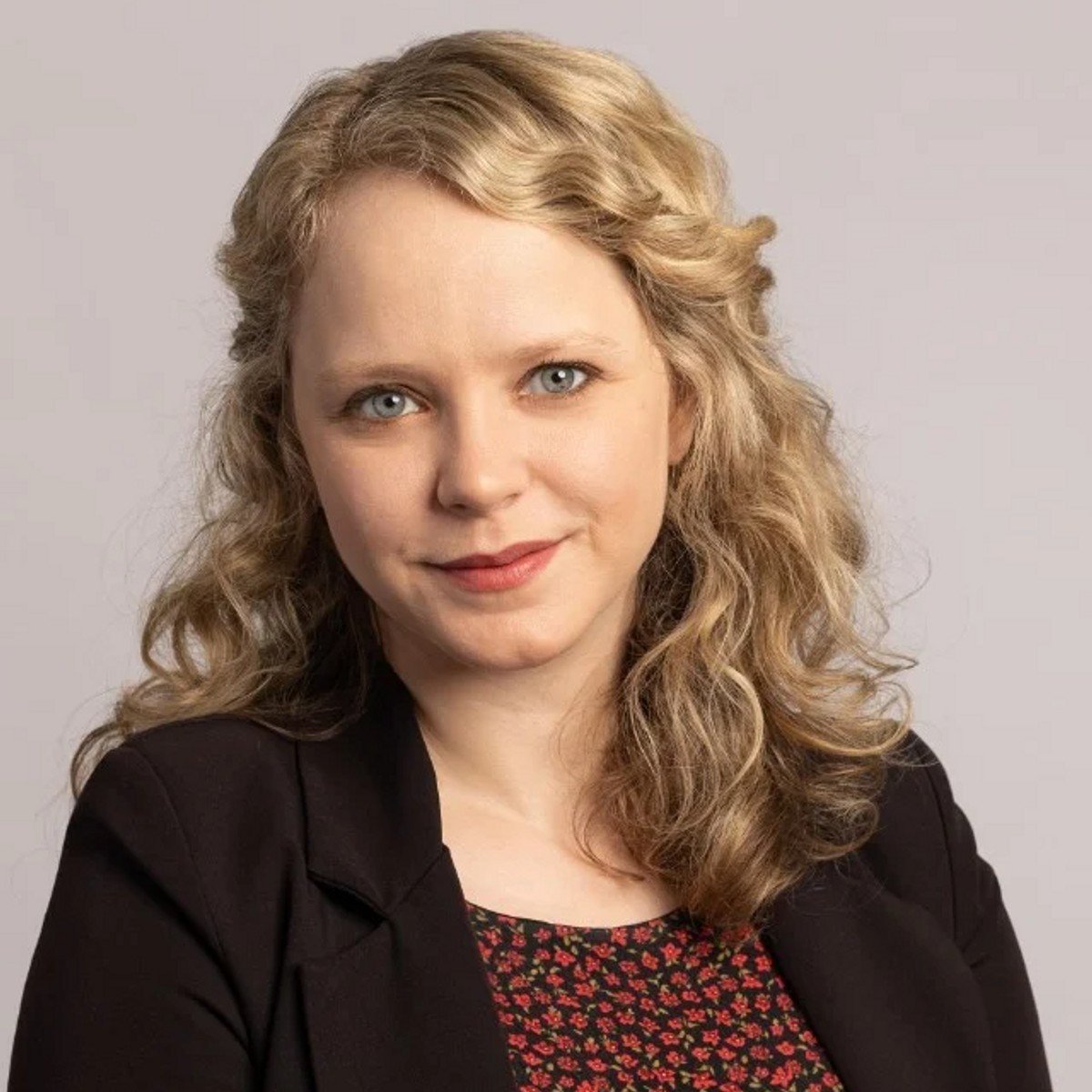
Ashleigh was 39 weeks pregnant and getting her final scan. Then the obstetrician went silent.

Ashleigh Rousseaux was 39 weeks pregnant, lying on the sonography chair for what was meant to be her final scan, when the silence in the room told her everything she needed to know.

She didn't need the obstetrician to explain it. She'd had countless ultrasounds by that point.

Her second pregnancy had been closely monitored after doctors discovered her baby boy had a heart defect at the morphology scan. She knew the anatomy. She knew what movement should look like. So, when the probe touched her stomach, her eyes went straight to his heart.

It was still.

"I don't even remember the doctor saying the words," Ashleigh told Mamamia. "I knew immediately what had happened."

"It was supposed to be our last appointment before the birth."

She was full term. But her baby, Dominic, had died.

Watch: Five things about grief no one really tells you. Post continues below.


Video via Psych2Go.

Up until that moment, the medical team had been cautiously optimistic. Ashleigh and her husband had spent months surrounded by specialists in Brisbane, preparing for a future that would involve immediate heart surgery after Dominic's birth.
ADVERTISEMENT

They had even met the intensive care team ahead of time.

Instead, every plan for the future collapsed in that single appointment.

Ashleigh left the room and tried to behave like a "normal" woman at the front desk, conscious of the other expectant parents around her.

"I remember going out to the front desk and trying to pay and them shooing me out the front door," she said. "I was just on autopilot, behaving like I had to keep it all together."

She walked outside and, standing on the street corner, made a phone call.

"The worst moment of my life was making that phone call and telling my husband that his baby had died," she said. "It was his first day at a new job. It could not possibly have been more horrendous timing."

Ashleigh is pictured with her husband, Sebastien. Image: Supplied.Ashleigh is pictured with her husband, Sebastien. Image: Supplied.

ADVERTISEMENT

At the hospital across the road, Dominic's death was confirmed. The language was clinical — "unexplained foetal demise" — a phrase that felt jarringly inadequate for what had just happened.

Staff continued with standard ultrasound procedures, measuring his body and estimating his weight.

Ashleigh found herself thinking thoughts that belonged to a different ending.

"Oh wow, he's going to be really big," she remembered thinking. "It was a really odd thing to be sitting in both of those spaces at once, like the awe and wonder of becoming a new parent to a new baby, but also nothing was how it was supposed to be anymore."

Dominic was born at 3:49am. His funeral was held one week later, on his due date.

Dominic's hand in Ashleigh's. Image: Supplied.Dominic's hand in Ashleigh's. Image: Supplied.

ADVERTISEMENT

The days in between moved strangely.

"Everything felt urgent and very slow at the same time. Like nothing mattered anymore," Ashleigh said.

"But the things that we needed to do had to happen immediately."

There were phone calls to funeral homes, conversations with celebrants, flowers to organise. Ashleigh and her husband wrote Dominic's eulogy together, even though they weren't ready to speak it aloud. They designed and printed the funeral booklets themselves, choosing paper carefully, wanting to do as much as they could with their own hands.

There were tender details too. Like the pair of teddy bears — one to stay with Dominic, one to keep as a family — embroidered with their children's names. Picking out a funeral outfit.

ADVERTISEMENT

Dominic had worn a onesie from a set of three in the hospital. Ashleigh decided he would be cremated in the second one, the third would be saved for a future baby, and the one he wore in hospital they would keep.

A blue and white striped onesie. The onesie Ashleigh mended for Dominic to wear at his funeral. Image: Supplied.

But when she picked one up, she noticed a small tear at the shoulder seam where the tag had been pulled through.

ADVERTISEMENT

"I just felt this overwhelming need to mend it for him," she said. "Not in choosing a perfect outfit, not finding something better or prettier or going to buy him something.

"I remember the day before the funeral getting out my sewing kit and really slowly taking my time to hand stitch this onesie back together.

"It felt like everything at the time. I had this sense all of my parenting opportunities had gone away — all of those milestones had disappeared and it became about what I can do right then.

"Mending that onesie, that moment was so important to me."

Navigating grief openly as a family.

In the years that followed Ashleigh, who now works as Red Noses' National Community Engagement Manager, and her husband, made a deliberate choice for their young family.

Dominic would not disappear. He would be spoken about. Remembered. Included.

Their children would grow up knowing they had a brother, and that love didn't end when a life did.

Ashleigh and Sebastien, and a tattooo of Ashleigh's handprint.Ashleigh and Sebastien wanted to keep Dominic's memory alive, with Asheligh even getting a tattoo of his handprint. Image: Suplied.

ADVERTISEMENT

They talked openly at home. Dominic was part of everyday family life. In early childhood settings, this openness was met with care. Kindergarten felt safe. Educators listened. They understood.

School, Ashleigh learnt, was different.

Listen: Exploring grief in all its forms, and what healthy versus unhealthy grieving can look like. Post continues below.

When her eldest started prep, Ashleigh proactively spoke to the teacher about her child being a bereaved sibling. The year went smoothly. Updates were shared. Conversations were handled gently. So when the move to grade one came, Ashleigh assumed that information — already documented — would follow her child.

It didn't.

One afternoon, Ashleigh received a phone call from the school administration. Her eldest had been sent to the office for being argumentative and refusing to cooperate in class. The behaviour didn't make sense, and Ashleigh asked for more detail.

ADVERTISEMENT

After the admin staff did some digging, the full story emerged.

The class had been given a three-word writing prompt: "The baby is…"

Her child wrote: "The baby is dead."

They had begun writing about their brother, but the teacher stopped them, and had told them it was inappropriate and "no one wanted to hear about that".

Ashleigh's eldest calmly pushed back, and explained there was nothing wrong with talking about their brother. The teacher refused to reconsider.

The exchange happened in front of the class.

Shame flooded in. Unable to recover, the child shut down and was sent to the office.

"The only baby they have ever known is their brother," Ashleigh said. "Of course, that's what they wrote."

By the time the admin staff understood the full context, they were apologetic. Ashleigh left work immediately and picked her child up.

At home, her child explained it simply: they class had been asked to write about babies, and they wrote about Dominic, who just happened to be dead.

Ashleigh doesn't want this story framed as one about a "bad teacher." She sees it as something far more common — what happens when adult discomfort collides with a child's lived reality.

ADVERTISEMENT

"My kids love talking about their brother and aren't used to judgment or awkwardness when they do so," she said. "Everyone around us knows and loves our whole family and accepts and embraces that we speak about Dominic openly."

Looking back, Ashleigh wishes she'd had the conversation with the teacher herself instead of trusting the system to carry the information forward.

One conversation could have prevented a grieving child from being publicly shamed for telling the truth.

Advive to help families with bereaved siblings.

Ashleigh wanted to share Dominic's story not just to keep his memory alive, but to ensure other bereaved families feel empowered to navigate the world without shame.

For bereaved families facing similar transitions, Ashleigh emphasised that preparation is key to approaching the unpredictable nature of the classroom.

"Anticipate there will be those, 'getting to know you' projects, as icebreakers for the kids," she said. "That project is so weighted for a bereaved family."

The second step is to prepare to have some hard conversations with educators early in a child's schooling.

"Mentally prepare yourself for the conversation to go badly," she advised. "Hopefully it won't, but if anything goes awry, you'll be prepared to keep things back on track."

Now, Ashleigh always tells teachers about Dominic. She prepares herself mentally, scripting responses in advance in case someone reacts poorly.

ADVERTISEMENT

"Most teachers do handle it beautifully," she said. "They've seen it all. Sometimes they respond with real curiosity and kindness. But sometimes they just don't get it."

The third and final tip is to research how grief can manifest in children.

"People have the misconceptions that grief is linear. It's really not — it comes in waves. That's how it is generally for adults, but for a child, you also have development happening at the same time," Ashleigh said.

"It can be that a child is quite unfazed by the death of a sibling when they are little. But as they get older, they start to understand how life would be different with their sibling here.

"Do some reading about what each child's age is able to understand about grief and loss to learn about what language is appropriate."

By sharing openly about grief, Ashleigh sees every moment of misunderstanding as an opportunity to model kindness and understanding for others.

"Our kids have found that other kids meet the topic with curiosity," she reflected. "If they're mean about it, they just haven't been taught yet how to be kind to families like ours. Everyone can learn to do better."

Red Nose supports anyone affected by the loss of a pregnancy, stillbirth, the death of a baby or child. Call their 24/7 Support Line on 1300 308 307 or visit theirwebsite www.rednose.org.au/support.

Feature image: Supplied.

00:00 / ???