family

The "invisible" FaceTime update every parent needs to turn on immediately.

If you want to support independent women's media, become a Mamamia subscriber . Get an all-access pass to everything we make, including exclusive podcasts, articles, videos and our exercise app, MOVE.

The latest Communication Safety update is a digital bodyguard that finally covers the "blind spots" parents have worried about for years.

From freezing FaceTime calls the moment nudity is detected to preventing explicit photos from being sent via shared albums and in apps like Snapchat and Instagram, these settings are the most powerful tools in your parenting toolkit.

But only if you know where to find the switches.

After a recent visit to Apple HQ, I got the inside scoop on the latest safety features that the experts themselves use for their own kids at home.

Watch: Do you know what your kids are consuming online? Post continues below.


Video: Mamamia

With a few toggles switched on, we can block inappropriate images and videos from being received, prevent surprise credit card charges from apps and games, and use parental controls for accessing everything, from explicit content on websites, songs, apps, games, and shows.

ADVERTISEMENT

In today's digital world, short of moving to a technology-free cult with no access to Wi-Fi, the best thing we can do as parents is arm ourselves with knowledge.

It's not about helicopter parenting; it's about smart parenting with the right tools at your disposal.

Listen to The Quicky discuss how to keep your kids safe on their phones. Post continues below.

Before getting started.

"Whether your child is using a new device or a hand-me-down, the most important first step is setting it up for a 'child-user'." Dr Joanne Orlando, PhD, digital safety expert and author of Generation Connected told Mamamia.

"This automatically turns on the parental controls needed to keep your child safe."

"Without a child-user setting, your child will be able to use the device like an adult, with access to everything online," she warned.

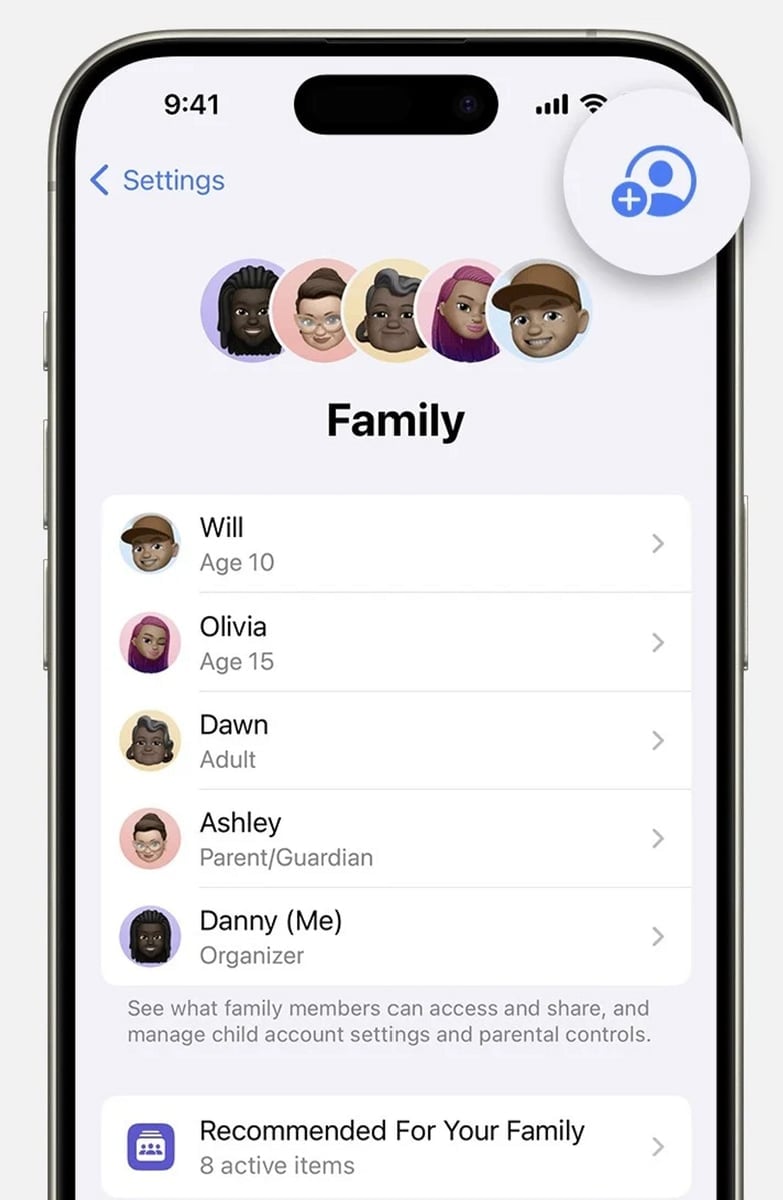
Here's how to set up a separate Apple Account for your child:

  • On your iPhone or iPad
  • Go to Settings > Family.
  • Tap the Add Member button
  • Tap Create Child Account, then tap Continue.

This prevents them from accessing your personal data while giving them their own safe space to explore. Then you can easily set age-based parental controls, and they can use Family Sharing.

EXPERT TIP:

"The child-user setting saves you from having to work out what to turn on and off to keep them safe," Dr. Orlando explained.

Never share the 'Screen Time' password with your child; this will null and void the safety features, as they will be able to override them. This is a parent or carer, 'family circle only' level of trust.

ADVERTISEMENT

screen grab from an iphone setting up a family account Image: Apple

1. Communication Safety: The nudity blocker had an upgrade.

This clever feature acts like a digital bodyguard and has recently received a serious upgrade in protection.

"Communication Safety" is now enabled by default for all child accounts under 13 in a Family Sharing group (and is strongly encouraged to switch on for teens up to 18).

While Apple has long offered parental controls for explicit content, this recent expansion is significant:

ADVERTISEMENT

Beyond Messages: Protective filtering now extends to FaceTime video calls, video messages, and shared photo libraries.

Third-Party Apps: The safety net now covers apps like Snapchat, Instagram, or WhatsApp. When a child selects a photo or video to share using the system "picker," the same rigorous safety standards are maintained.

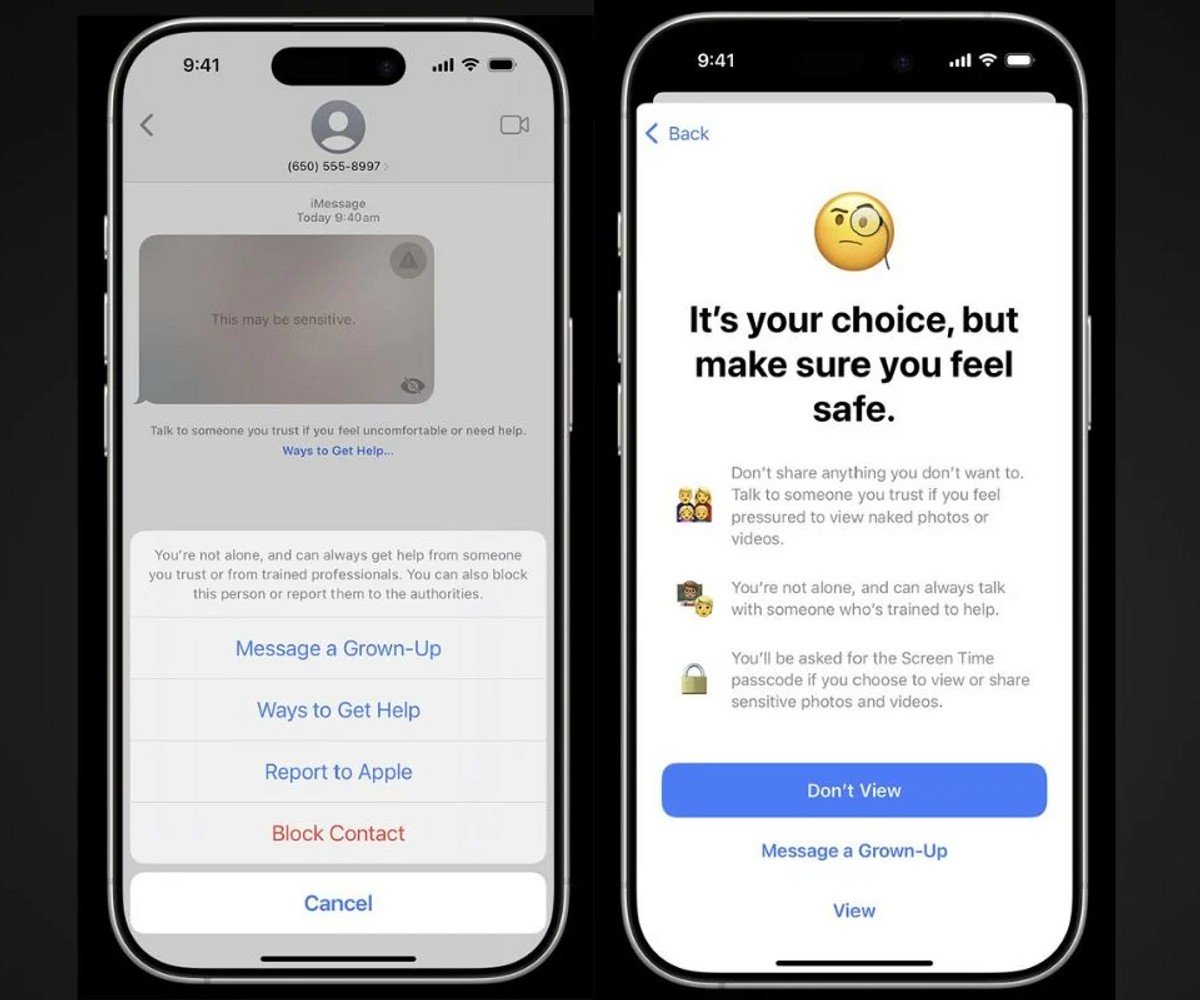
Proactive Blurring: The system proactively blurs sensitive media containing nudity during both incoming and outgoing transmissions.

When a child encounters this content, they see a safety intervention screen that validates their choice to avoid it and provides built-in support options to get help.

For children under 13, Apple has tightened the screws: they now must enter the Screen Time passcode to view or send sensitive content.

Since they shouldn't know this passcode, it effectively blocks the content until they come to you.

The content remains locked behind your secret passcode, putting you firmly in control of the conversation.

screen grabs of sensitve information settings Image: Apple

ADVERTISEMENT

How to activate Communication Safety settings:

  • Open Screen Time settings:
  • iPhone, iPad, or Apple Vision Pro: Go to Settings > Screen Time.
  • Mac: Choose the Apple menu > System Settings, then click Screen Time.
  • Select the name of a child in your family group.
  • Select Communication Safety.
  • Turn Communication Safety on or off. You might need to enter the Screen Time passcode for the device.

2. Ask to Buy: your digital wallet guardian.

If you've ever been stung by surprise charges from app purchases or Fortnite skins, this one is for you.

The 'Ask to Buy' feature gives you ultimate veto power. Every time your child tries to download an app, even the free ones, or buy a movie or book, you'll receive a notification on your own device.

You can review the age rating and the price before tapping "Approve" or "Decline."No more unexpected bills. And you don't need to be in the same room; you can approve it remotely from your device. BOOM!

ask to buy message request example from Apple Image: Apple

ADVERTISEMENT

How to activate Ask To Buy Function:

  • Open the Settings app.
  • Tap Family (located right near the top).
  • Tap your family member's (child's) name, then tap Ask to Buy.
  • Toggle Require Purchase Approval to On.

3. Parental controls: content and privacy restrictions.

Through 'Screen Time', you can set up comprehensive content and privacy restrictions that put you in the driver's seat. This feature lets you block explicit content, and you can set age-related restrictions for content they can view on websites, for purchases, downloads, and even AI tools.

It's also a tool that allows parents to choose how and how often kids can use their devices.

parental control screen grab apple Image: Apple

ADVERTISEMENT

How to turn on Content and Privacy Restrictions:

  • Open the Settings app, then tap Screen Time.
  • Under Family, choose your child's name.
  • Tap Content & Privacy Restrictions. If asked, enter your Screen Time passcode, then turn on Content & Privacy Restrictions.

After you've turned on Content & Privacy Restrictions, you can set up a heap of specific parental controls. You can find the full and comprehensive list of parental controls you can activate here.

Remember, the goal isn't to restrict your kids completely, but to create a safe digital environment where they can explore and learn while staying protected from online risks.

What are your tried-and-tested hacks for keeping kids safe online? Share in the comments below!

Dr Joanne Orlando, PhD, is a digital safety expert and author of Generation Connected.

Feature Image: Supplied.

Calling all parents!

Complete our 3 minute survey for a chance to win a $1,000 gift voucher in our quarterly draw!

Take survey →

00:00 / ???