wellness

If you're over 35, you should be doing these 5 things every day.

If you want to support independent women's media, become a Mamamia subscriber . Get an all-access pass to everything we make, including exclusive podcasts, articles, videos and our exercise app, MOVE.

Welcome to 2026, a new year filled with promise. A fresh start, a clean slate where we resolve to do better, be better.

But sometimes it can also feel overwhelming to introduce a full new routine.

Too often, these official or loosely veiled "resolutions" fall by the wayside before February even arrives. Because it feels like work and admin.

Recently though, some game-changing advice for "ageing better" stopped me mid-scroll.

Best-selling author Dr. Amir Khan shared simple yet powerful longevity hacks on his Instagram that, unlike so many wellness trends I've scrolled past, are genuinely small and doable.

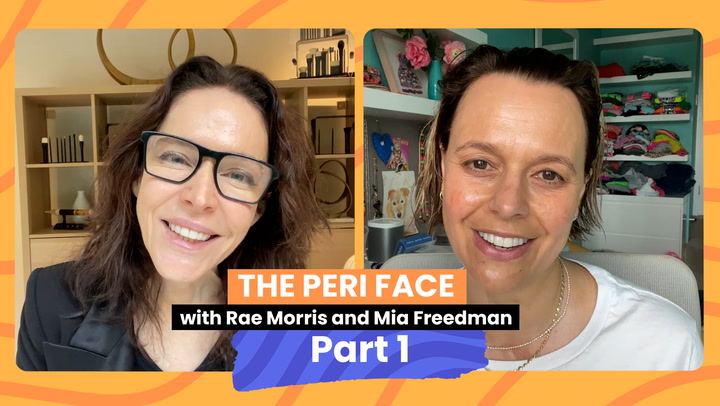
Watch: Our experts unpack 'Body Longevity' on Well. Post continues below.


Video: Mamamia

These aren't about overhauling your entire life or spending hours at the gym. They're subtle shifts that work with your body's natural changes as you age.
ADVERTISEMENT

To protect your heart health, maintain your strength and balance, and keep your metabolism humming.

If you're over 35 years old (it's me, hi, I'm the problem it's me)… these five science-backed habits can genuinely transform how you age.

1. Get morning light.

Dr. Khan explained that our circadian rhythm becomes less responsive after 35.

He said that even just five minutes of outdoor morning light "hits receptors in the back of your eyes and sends signals to your brain's master clock that resets cortisol timing, boosts energy, improves sleep pressure at night, and even stabilises appetite hormones."

He called it "the most powerful free tool we have."

I've naturally been doing this in the mornings without even realising I was benefiting my circadian rhythm.

I've been waking up earlier than usual and have found myself yearning to go for a walk outside in the fresh air and morning sunshine over the treadmill at the gym.

I can speak to the serotonin boost I feel from the peacefulness of the world before it gets busy, and the feeling of morning sunshine on my face. Sometimes it really is the small things.

2. Boost your VO2 Max every single day.

"VO2 Max is essentially how well your body can deliver and use oxygen, and it's one of the strongest predictors of our health," Dr. Khan explained.

As we age, our hearts become slightly less efficient at pumping blood, and our mitochondria become less efficient at using oxygen.

ADVERTISEMENT

His solution? Short bursts of intensity—just 20 to 40 seconds of fast stairs, a brisk uphill walk, or a quick cycle sprint.

"This forces your muscles to demand more oxygen than usual, and that stimulates new mitochondria and improves oxygen extraction."

The best part? He said you don't need HIIT classes every day, "just a moment each day where your heart rate genuinely rises."

This is something I certainly haven't been doing unless at the gym. So it's good to know you can run up a flight of stairs and achieve this without dedicating separate "exercise time"—simply by integrating it into your day.

3. Check your blood pressure at home.

Dr. Khan warned that blood pressure "creeps up quietly as your arteries stiffen with age."

He recommended checking it once a month at rest to establish a baseline. If it's higher than 135 over 85 at home, he advised doing daily readings for a week and calculating the average.

"That average is what predicts your stroke and heart attack risk—not one random reading—and catching it early can make all the difference."

Okay, this is something I have never considered (or clearly done except at the GP). I needed to look into how to measure blood pressure at home…

The most accurate method is a home blood pressure monitor—an automatic digital cuff. They're relatively inexpensive (you can get one on Amazon for under $40), easy to use, and medically reliable.

ADVERTISEMENT

4. Train your balance.

"We need to all be doing this," Dr. Khan emphasised. He explained that daily balance training relies on your cerebellum, inner ear, and tiny sensors in your muscles called proprioceptors—systems that decline after 35 unless you challenge them.

His recommendation? Thirty seconds standing on one leg while brushing your teeth.

"It's a really good way to train your core coordination and brain-body signalling and dramatically reduces future fall and injury risk."

What I love about this advice is that brushing your teeth is something you're already doing twice a day, so it's an easy way to remember—and you're being ultra-productive, killing two birds with one stone.

5. Build muscles and bones.

Dr. Khan explained that from your mid-30s onwards, you slowly lose muscle fibres and bone density.

Strength and impact exercises send mechanical signals through your muscles and bones in a process called mechanotransduction.

"Your body responds by building them back stronger. This protects metabolism, joint stability, glucose control, and long-term fracture risk, so get them in twice a week."

This is something I think about a lot as I head further into my forties, and an area I really need to lift my game (pun intended). Here are some easy at-home exercises you can incorporate (that I'll be doing too):

A. Strength (8–12 reps each, repeat 2–3 rounds)

Squats or lunges

ADVERTISEMENT

Push-ups

Backpack rows

Glute bridges

Plank (20–40 seconds)

B. Impact (1–2 minutes total)

30 seconds jumping jacks or heel drops

30 seconds light hops or stair steps

The beauty of small changes.

What strikes me most about Dr. Khan's advice is how accessible it all is.

There's no expensive gym membership required, no complicated supplements to track, no hour-long morning routine to squeeze into an already packed schedule.

These are five micro-habits that slot seamlessly into the life you're already living: sunlight while you walk to get a coffee, stairs when you could take the elevator, balance while you brush your teeth.

They're the antidote to those overwhelming New Year's resolutions that collapse under their own weight.

As we step into 2026, maybe the secret to ageing better isn't about dramatic transformation—it's about tiny, consistent acts of care that compound over time.

Five simple habits that honour where your body is now and protect where it's going.

Here's to a year of ageing better, not harder.

For more expert advice, listen to this episode of Mamamia's health podcast, Well, below.

Feature Image: Unsplash.

00:00 / ???